Why OpenAI’s Robot Push Could Reshape the AI Stack From Chatbots to Physical Work
Robotics is becoming the next serious test for AI.
For the last two years, most AI users have experienced the technology through text boxes, copilots, image generators, and workflow automation. That layer is still expanding fast, but the bigger shift may be what happens when AI leaves the browser and starts acting in the physical world. OpenAI’s renewed robotics push signals exactly that: the industry is moving from systems that answer to systems that do.
That matters because physical execution is where AI stops being a software novelty and starts becoming infrastructure.
The real opportunity is not a humanoid demo
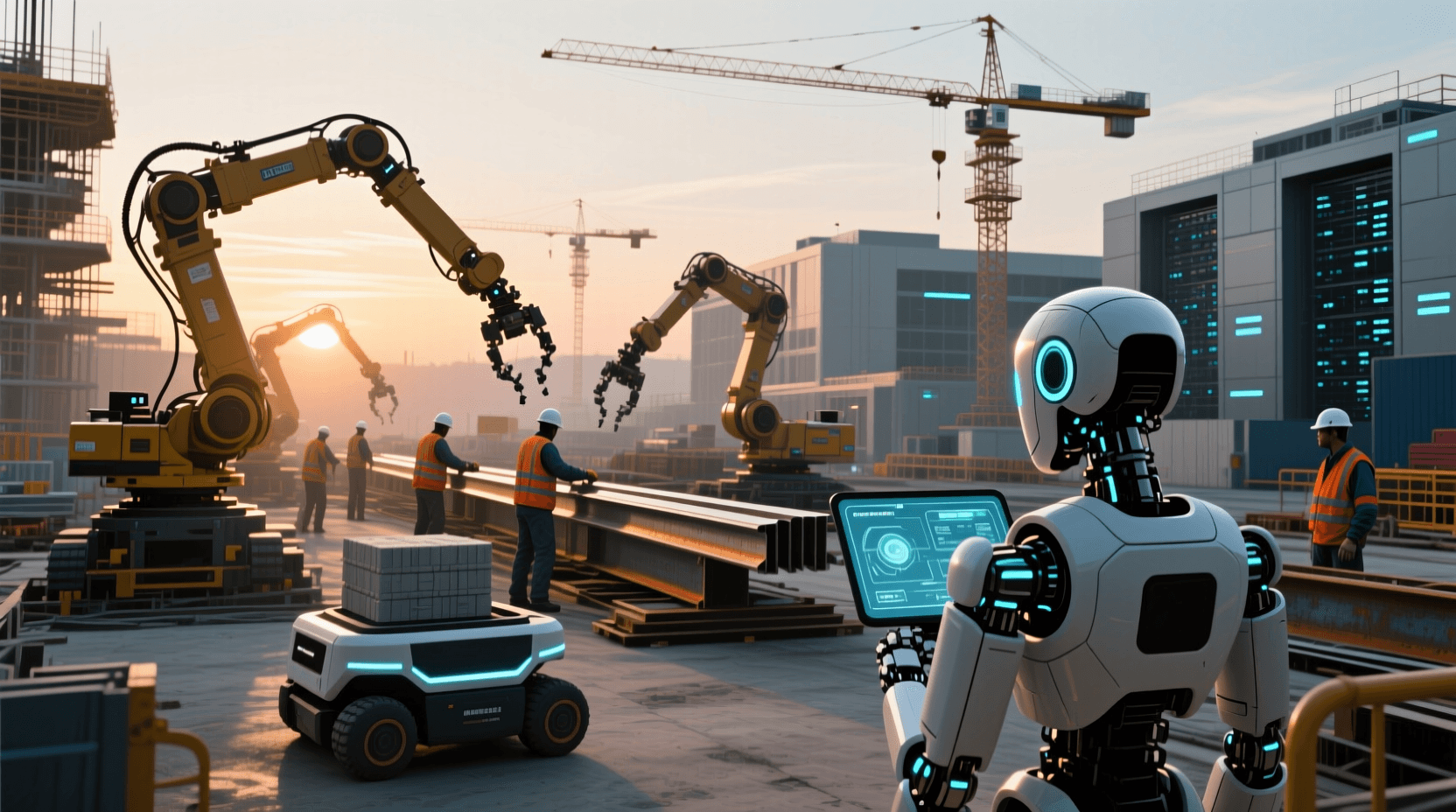
When people hear “personal robot,” they often imagine a polished humanoid assistant folding laundry, cooking dinner, and following voice commands around the house. That vision is compelling, but it can also be distracting. The more immediate business story is much less cinematic: robots that support construction, logistics, maintenance, warehousing, inspection, and other infrastructure-heavy environments.
That is the practical path forward.
AI companies are learning that the shortest route to general-purpose robotics is not consumer charm. It is constrained, repetitive, economically valuable work in environments where labor shortages, safety concerns, and process inefficiencies already exist. A robot that helps build data centers, sort materials, inspect equipment, or move components on a job site does not need to be socially impressive. It needs to be reliable, cheap enough to deploy, and adaptable enough to handle variation.
For AI tool users, this is an important mindset shift. The next wave of AI value may not come from prettier interfaces. It may come from systems that connect perception, planning, and action across physical workflows.
World models are becoming product strategy
One of the most interesting implications of this move is that robotics is no longer a side quest for AI labs. It is becoming a natural extension of model development.
If an AI system can understand scenes, predict outcomes, infer intent, and plan multi-step actions, then robotics becomes less about hard-coding behavior and more about giving a model a body. That is why advances in simulation, multimodal reasoning, and video generation matter more than they first appear. Tools like OpenAI are not just building better assistants for writing and coding. They are building the underlying intelligence layers that could eventually support embodied agents.
This is also where OpenAI Sora becomes more strategically interesting than its current “video model” label suggests. Video generation and world simulation are closely related capabilities. If a model can generate plausible physical scenes, predict object interactions, and maintain consistency across time, those same strengths can support robot training, scenario testing, and action planning. Developers should pay attention to this convergence. The future robotics stack may be trained as much in simulation as in the real world.
Personal robots will depend on workflow software first
The dream of “a robot that does anything you need” sounds like a hardware revolution, but in practice it will be a workflow revolution.
Before a robot can be useful in a home or workplace, it needs to connect with calendars, messages, inventory systems, smart devices, task queues, maps, permissions, and business rules. In other words, it needs orchestration. The robot itself may become the visible endpoint, but the real product will be the automation layer behind it.
That is why no-code and agentic workflow platforms matter right now. Tools like Activepieces show how the market is already preparing for AI systems that must trigger actions across apps, APIs, and operational steps. Today, those automations live in software. Tomorrow, they may extend into machines that can open a door, retrieve an item, inspect a shelf, or reset a piece of equipment.
For developers, the lesson is clear: start thinking of robotics as an API consumer and an API producer. A useful robot will not be a standalone gadget. It will be another node in an automation graph.
The biggest challenge is trust, not intelligence
The industry often frames robotics as a model capability problem. But for widespread adoption, trust may be the harder barrier.
Users can tolerate a chatbot hallucinating a mediocre draft. They cannot tolerate a robot making unsafe decisions with tools, vehicles, or household objects. That means robotics will force AI companies to confront a harsher standard of reliability. Error handling, bounded autonomy, human override, audit logs, and environment-specific safety policies will become central product features rather than compliance afterthoughts.
This is where OpenAI’s return to robotics could influence the broader ecosystem. If leading model providers begin designing for physical-world reliability, developers building on top of those systems may inherit better abstractions for planning, simulation, and safety. That would benefit far more than robots. It would improve enterprise agents, industrial automation, and any AI application where mistakes carry real-world costs.
What AI builders should do now
Developers and AI product teams do not need to wait for a household robot to arrive.
The smarter move is to prepare for embodied AI by focusing on three areas now: structured workflows, multimodal inputs, and action reliability. Build systems that can interpret images and video, reason over changing environments, and execute repeatable tasks through software integrations. The teams that master those foundations will be best positioned when robotics platforms mature.
The long-term vision of a personal robot for everyone may still be years away. But the path to it is already changing the AI market. We are moving from assistants that generate content to agents that operate systems, and eventually to machines that manipulate the world itself.
That is a much bigger shift than a new device category. It is the expansion of AI from interface layer to labor layer.
And once that happens, every AI tool company will have to decide whether it is building for conversation, automation, or action.