Why Playable AI Worlds Could Become the Next Platform Layer
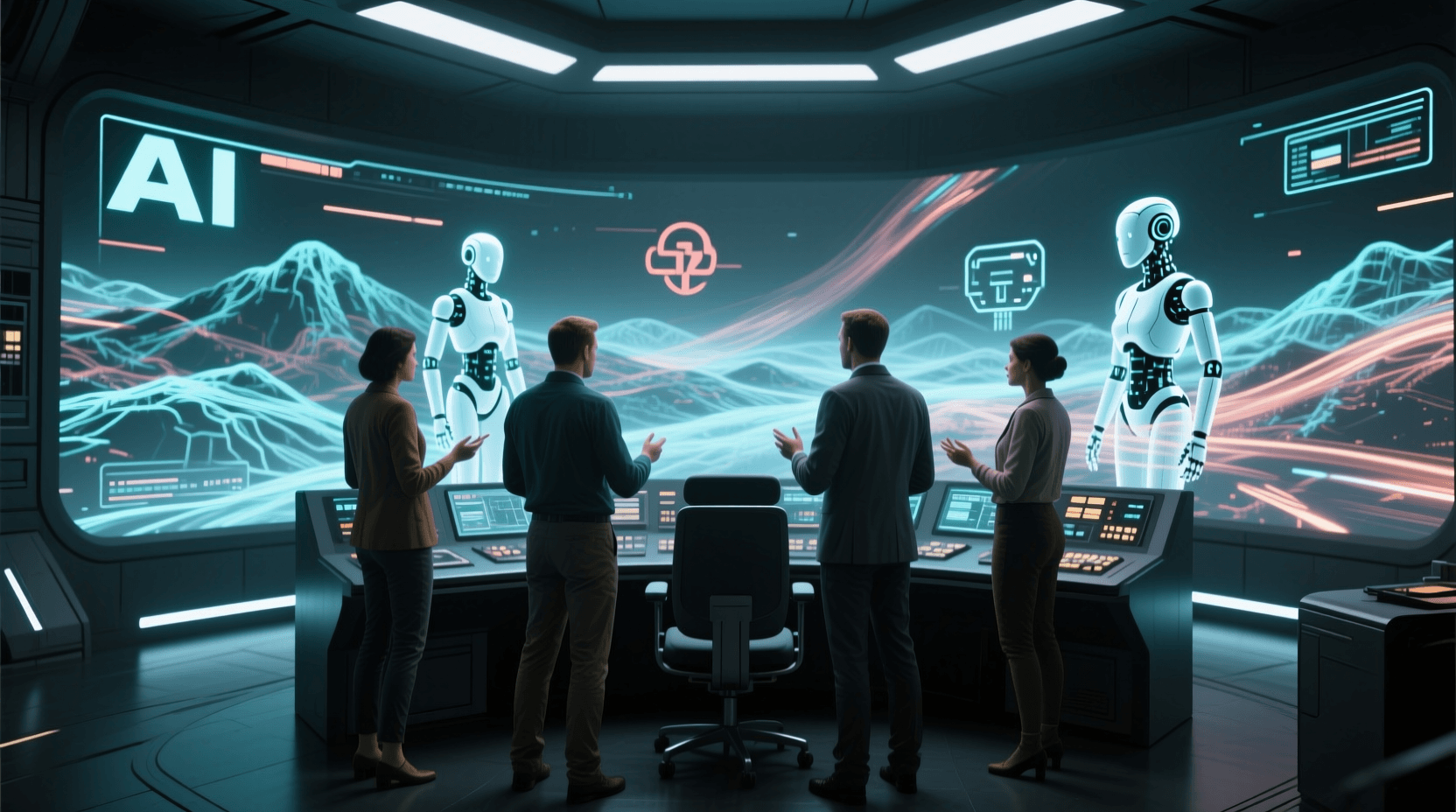
The most interesting part of AI-generated game worlds is not nostalgia. It’s infrastructure.
When an AI system can simulate a recognizable multiplayer environment in real time for several people at once, we’re no longer talking about a clever demo or a new way to remix old games. We’re looking at the early shape of a new computing layer: worlds generated on demand, responsive to multiple users, and flexible enough to become training grounds for agents, interfaces for software, and eventually products in their own right.
That shift matters far beyond gaming.
From content generation to world generation
Most AI product conversations still revolve around outputs: a paragraph, an image, a video clip, a code suggestion. But playable simulations point to something more ambitious. Instead of generating a static artifact, the model generates an environment that persists long enough for people and agents to act inside it.
That changes the economics of creation. A generated image is consumed in seconds. A generated world can host interaction, experimentation, collaboration, and repeated use. It becomes a service, not just an asset.
For AI tool users, this means the interface itself may start to evolve from chat windows and dashboards into synthetic spaces. Imagine customer support training in a generated office, industrial planning in a simulated warehouse, or agent testing in a dynamic digital city. The value is not just realism. It’s controllability.
Developers should pay attention here because world models could become the bridge between generative AI and operational AI. Once a model can maintain spatial consistency, multiplayer state, and responsive rendering, it starts to look less like a media engine and more like a sandbox for decision-making systems.
Multiplayer is the real milestone
A lot of AI demos look impressive in single-user mode and collapse under shared interaction. Multiplayer changes the bar completely.
As soon as multiple participants can act at once, the system has to resolve competing inputs, maintain coherence, and preserve a believable shared reality. That is much closer to real business and robotics environments, where many actors—human or machine—must coordinate under uncertainty.
This is why developers building AI agents should see playable simulations as more than entertainment tech. They are emerging test harnesses. If you can drop several agents into a generated environment and watch how they navigate, collaborate, fail, and recover, you gain something far richer than benchmark scores.
That has direct implications for platforms like Agensi, which focuses on expanding agent capabilities through a marketplace of skills. In a world where agents can be upgraded in minutes, the next challenge is not just adding skills quickly—it’s validating those skills in environments that feel closer to reality. Playable AI worlds could become the proving ground where new agent abilities are stress-tested before deployment.
The next UX may look more like simulation than software
There’s also a product design lesson here. We may be moving toward software that users inhabit rather than merely operate.
Today, many AI applications still ask users to describe what they want and wait for output. Tomorrow’s systems may instead place users inside a live simulation where they can steer outcomes directly. That’s a very different interaction model. It’s visual, embodied, and continuous.
This is where creative tools will converge with world models. Video generation systems already train users to think in scenes, camera motion, realism, and narrative flow. A tool like Sora 2 - Cinematic AI Video Generator with Audio shows how quickly AI is improving at producing believable motion, synchronized sound, and cinematic continuity. The logical next step is not just better clips, but worlds that remain interactive after the scene is generated.
For creators, that opens a new category between filmmaking and game design. For businesses, it could create immersive demos, explorable training content, and branded environments that adapt to each visitor.
Why this matters for AI agents right now
One underappreciated angle is deployment. Many organizations want AI assistants, but they struggle with setup complexity, hosting, maintenance, and orchestration. If playable worlds become a practical interface for agents, companies will need easier ways to stand up persistent assistants that can operate continuously.
That’s why lightweight deployment tools matter just as much as frontier models. ClawOneClick, for example, lowers the barrier to launching a managed 24/7 AI assistant with minimal setup. As AI experiences become more persistent and interactive, the winning products may not be the flashiest demos, but the ones that make continuous operation simple.
In other words, the future of AI worlds depends on boring reliability as much as dazzling simulation.
The bigger opportunity: synthetic environments as AI infrastructure
The long-term story is not “AI remakes old games.” It’s that synthetic environments may become core infrastructure for training, evaluation, and human-AI collaboration.
Developers should start thinking in layers:
- models that simulate state
- models that render perception
- agents that act within the environment
- marketplaces that expand agent abilities
- deployment systems that keep those agents running continuously
When those layers mature, we won’t just have better generative media. We’ll have programmable realities for testing ideas before they touch the real world.
That could reshape robotics, enterprise software, education, defense, entertainment, and customer experience. The first examples may look like retro game experiments, but the deeper signal is that AI is learning to host interaction, not just produce output.
And once AI can host interaction for multiple participants at once, it stops being a tool in the narrow sense. It starts becoming a place.