Why Powerful AI Models Could Finally Make Secure Software a Competitive Advantage
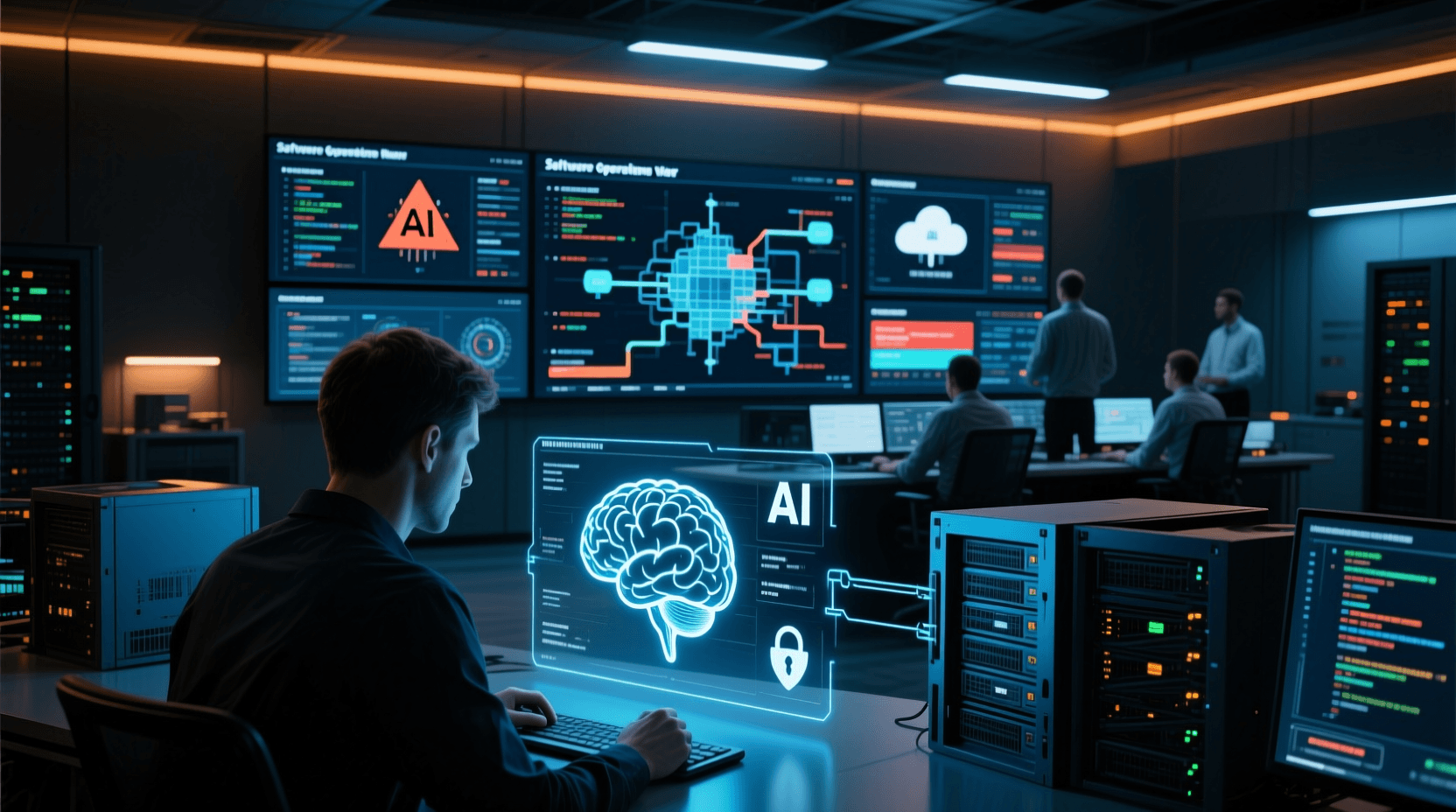
The loudest reaction to every new frontier model is predictable: What if bad actors use it first? That fear is understandable, especially when a model is framed as unusually capable in offensive security contexts. But the more important shift for the AI industry is not that cyberattacks may become more automated. It’s that advanced models are starting to expose a much older weakness: modern software was never built under the assumption that every bug would eventually be discovered by something tireless, cheap, and highly adaptive.
That is the real reckoning.
For years, security has lived in a strange corner of product development—essential, expensive, and often postponed. Teams promised they would fix it after launch, after growth, after the next funding round, after the enterprise deal closed. AI changes that timeline. When model capabilities rise, the cost of probing applications, APIs, cloud deployments, and identity systems drops dramatically. The issue is not just “AI hackers.” It’s the collapse of security through obscurity as a viable business strategy.
AI won’t just strengthen attackers—it will expose weak development culture
The cybersecurity conversation around advanced models often centers on offensive misuse. That matters, but it can also distract from the more uncomfortable truth: many organizations are vulnerable because they normalized insecure defaults.
Hardcoded secrets. Overprivileged service accounts. Unpatched dependencies. Admin panels exposed to the internet. LLM wrappers built on top of fragile APIs with no rate limiting and no meaningful audit trail. These were already bad practices. AI simply turns them from manageable liabilities into rapidly discoverable ones.
That means the winners in the next wave of software won’t just be the teams with the smartest models. They’ll be the ones with the most resilient systems around those models.
This is where companies like Anthropic become strategically important beyond model quality alone. The market increasingly needs AI systems that are not only powerful, but reliable, interpretable, and steerable. Those attributes are not abstract safety ideals anymore; they are product requirements. If a model can be directed precisely, monitored effectively, and integrated with clear operational controls, developers have a better chance of building secure workflows instead of unpredictable attack surfaces.
The real pressure lands on builders, not just security teams
One of the biggest mistakes in AI product development is treating security as a post-processing layer. A team ships an AI feature, then asks security to “review it” before launch. That workflow may have been barely tolerable in traditional SaaS. In AI-native products, it is a recipe for compounding risk.
Why? Because AI systems are not just features. They are behavior engines connected to tools, memory, data pipelines, and external services. Every connector expands the blast radius. Every autonomous action raises the stakes. Every MCP server, plugin, or internal integration creates another path that needs authentication, authorization, observability, and rollback controls.
Developers should assume that if a workflow can be abused, an AI-assisted adversary will find a way to test it at scale. That changes what “good enough” looks like. It means threat modeling must happen during product design, not after deployment. It means prompt injection is not a niche concern. It means logging and anomaly detection are core product infrastructure.
Tools that help teams measure and interpret cyber risk will become much more valuable in this environment. CyberExpert-Beta, for example, points toward a future where AI is used not only to generate code or automate tasks, but to continuously analyze cybersecurity KPIs across networks and online services. That kind of visibility matters because organizations can no longer rely on annual audits and static checklists. They need live signals.
AI security is becoming a market filter
There’s also a business story here that founders should not ignore. As AI capabilities improve, customers will become less impressed by raw intelligence alone. They will ask harder questions:
- How is model behavior constrained?
- What happens if an agent is manipulated?
- Can actions be traced and reversed?
- How are secrets handled?
- What data reaches third-party models?
- What safeguards exist around tool use?
In other words, security is moving from compliance theater to purchasing criteria.
That’s a major shift. For startups, it means secure architecture may become a differentiator rather than a drag on speed. For enterprises, it means vendor evaluation will increasingly focus on operational discipline, not just demo quality. For AI tool users, it means the smartest buying decision may not be the tool with the most dramatic benchmark, but the one with the clearest controls and the most trustworthy deployment model.
The next AI boom will belong to disciplined builders
We are still in the phase where the industry celebrates capability first and governance second. That won’t last. As the ecosystem matures, the companies that thrive will be those that treat security, reliability, and observability as part of the product itself.
That’s the broader lesson of the current moment. The rise of highly capable models is not merely a warning about cyber offense. It is a stress test for the software industry’s habits. Teams that cut corners will feel that pressure first. Teams that build with constraints, monitoring, and clear failure modes will be better positioned to scale.
If you want a wider lens on where this is heading, Super AI Boom captures the larger reality: AI is expanding fast, and its impact is not limited to chat interfaces or productivity gains. It is reshaping infrastructure expectations, risk models, and what “enterprise-ready” really means.
The cybersecurity reckoning, then, is not simply that AI may help attackers. It’s that AI is ending the era in which developers could treat security as optional and still expect to compete. That may be uncomfortable for the industry—but in the long run, it’s exactly the correction software needed.