Why Realtime Voice AI Is Shifting From Speech Output to Social Intelligence
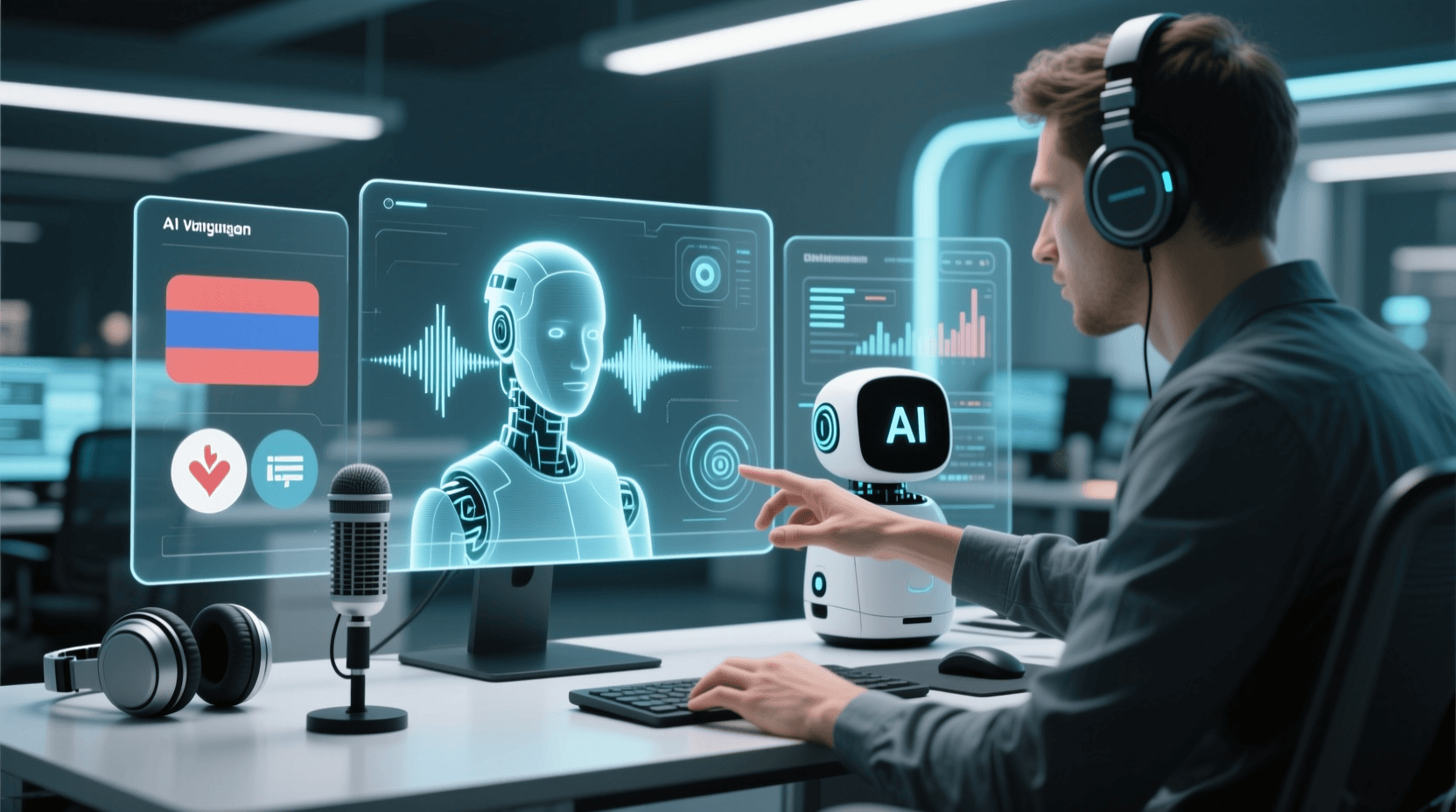
Voice AI is entering a new phase, and it is not just about sounding more human anymore. The bigger shift is that speech models are starting to behave more like conversational performers: they can adopt roles, react to emotional cues, and interpret the nonverbal signals wrapped inside speech itself. That change matters far more than another incremental improvement in pronunciation or latency.
For AI tool users and developers, the real story behind the latest generation of realtime voice models is this: the competitive edge is moving from raw synthesis quality to interaction quality.
The new battleground is conversational presence
For years, text-to-speech products were judged on obvious metrics: naturalness, clarity, accent quality, and speed. Those still matter, of course. A tool like RealTime TTS is useful precisely because instant, fluid voice generation removes friction for creators, educators, and teams that need fast audio output without a complicated setup.
But realtime voice systems are now being evaluated on something subtler: whether they feel socially aware during live interaction. Can the model detect hesitation? Can it respond differently when a user sounds frustrated, playful, formal, or uncertain? Can it sustain a persona without slipping into generic assistant mode after three turns?
That is a different product category from classic TTS, even if both involve audio. It is the difference between generating a voice and maintaining a believable presence.
Persona is becoming infrastructure, not a gimmick
Custom personas used to feel like a novelty feature. Give a bot a character, a speaking style, maybe a backstory, and call it “engaging.” But for customer support, education, gaming, language learning, and entertainment, persona consistency is now becoming core infrastructure.
If a voice agent is supposed to be a patient tutor, a luxury concierge, a game NPC, or a healthcare intake assistant, its usefulness depends on staying in role while still being accurate and safe. That is much harder than producing expressive audio.
This is where roleplay-specific tuning becomes commercially important. Developers are realizing that users do not just want a voice that sounds realistic; they want one that behaves predictably within a chosen context. A sales demo voice should not suddenly sound like a therapist. A game companion should not revert into FAQ mode. A language tutor should know when to correct, encourage, or slow down.
That opens up a major opportunity for builders creating vertical voice products. The winners may not be the labs with the flashiest general-purpose demos, but the teams that package persona control into reliable workflows and domain-specific experiences.
Paralinguistic understanding changes what “listening” means
One of the most important developments in voice AI is the growing emphasis on paralinguistics: tone, pacing, stress, hesitation, laughter, emotional coloring, and other cues that live beyond the literal words.
This is a big deal because human conversation is full of meaning that never appears in transcripts. A customer saying “fine” in a flat tone can mean the opposite. A student pausing before answering may signal confusion, not silence. A caller speaking faster might indicate urgency rather than enthusiasm.
When models start interpreting these signals in realtime, voice interfaces become more adaptive and potentially more useful. But they also become more sensitive systems, which raises product design questions developers cannot ignore.
If your app reacts to emotional cues, what exactly is it inferring? How confidently? Is that inference stored, exposed to analytics, or used to personalize future responses? Voice products are moving closer to affective computing, and that means UX and governance need to mature alongside model capability.
TTS tools will benefit, not disappear
This evolution does not make standalone speech generation obsolete. In fact, it increases the value of specialized tools.
For example, MAR8 - Text to Speech AI by CAMB.AI points toward a future where low-latency, emotion-rich speech and voice cloning become essential building blocks for apps that need both expressive output and production-grade control. Not every team wants to build an end-to-end conversational stack from scratch. Many will prefer combining strong TTS layers with their own orchestration, memory, and business logic.
Meanwhile, entertainment and creator platforms will keep pushing the edge of realism. Tools like Celebrity AI show how quickly hyper-realistic video and voice cloning can turn synthetic media into an interactive format, not just a generated asset. Once audiences expect personalities rather than static outputs, the line between content generation and live performance starts to blur.
What developers should do now
The smartest response is not to chase every new voice model release. It is to rethink product architecture around conversation as a multimodal, stateful experience.
Developers should ask:
- Do we need a voice, or a persona?
- Are we optimizing for audio quality, emotional responsiveness, or task completion?
- What level of realtime behavior actually improves the user journey?
- Where do we need deterministic controls to prevent role drift or unsafe improvisation?
- How will we disclose cloning, synthetic identity, or emotional inference to users?
That last point is especially urgent. As voice systems become more convincing, trust will depend less on realism and more on transparency.
The next wave of AI voice products will feel less like tools and more like counterparts
The market is moving beyond “make this text sound natural.” The next generation of products will be judged on whether they can participate in conversation with timing, tone, memory, and role consistency that feels coherent.
For users, that means more immersive assistants, tutors, creators, and characters. For developers, it means voice is no longer a thin interface layer. It is becoming a behavior layer.
And that may be the most important shift of all: the future of voice AI will not be won by models that merely speak well, but by systems that understand how speaking changes meaning.