Why Rural Data Centers Could Reshape the Next Wave of AI Infrastructure
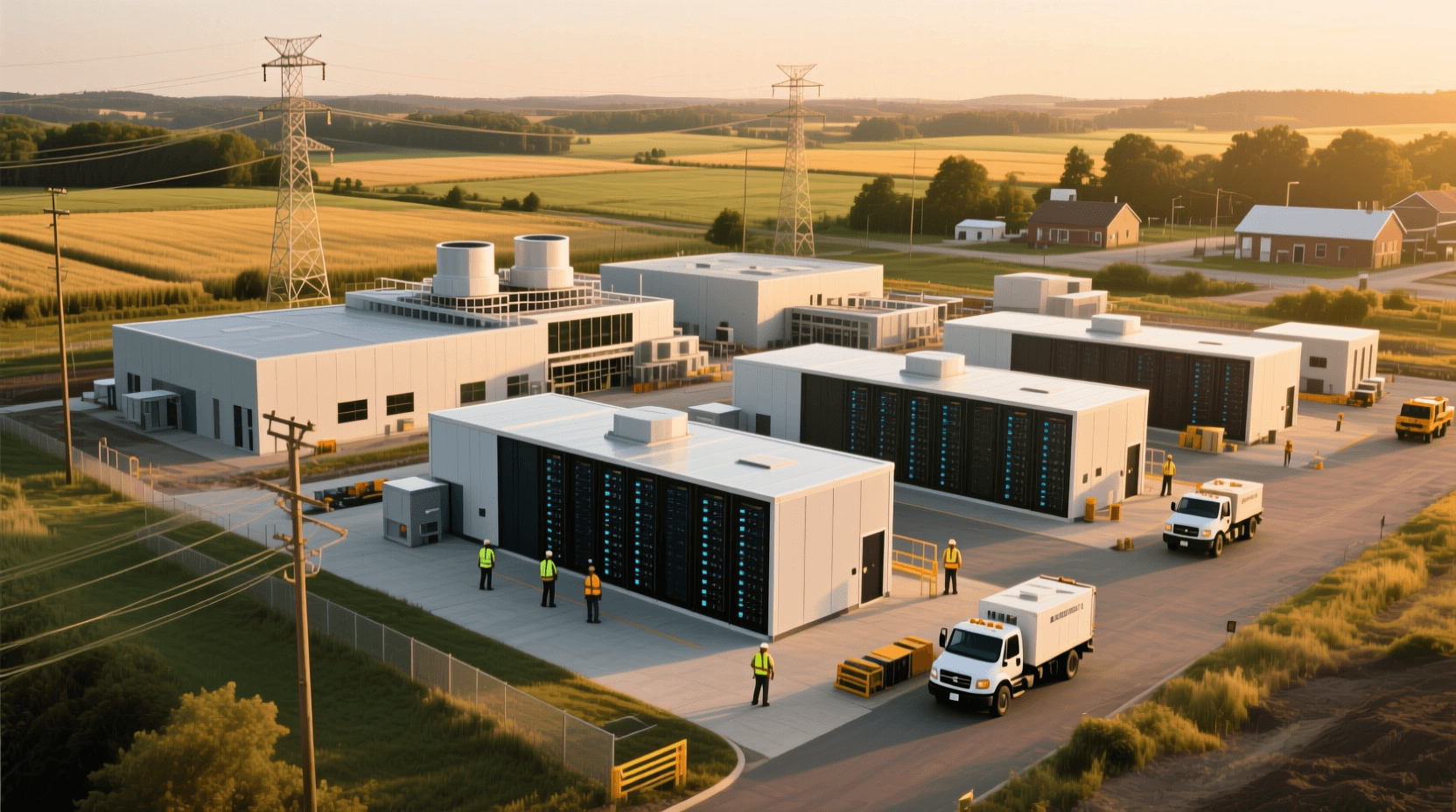
The AI boom is no longer just a Silicon Valley story. It’s becoming a land, power, and workforce story—and increasingly, that story is moving into rural America.
For years, conversations about AI infrastructure focused on big-city cloud regions, elite research labs, and hyperscaler campuses. But the economics are shifting. As demand for compute keeps rising, developers are looking beyond traditional tech hubs toward former industrial sites, underused land, and communities eager for new investment. Rural America is becoming attractive not because it is trendy, but because it offers what AI increasingly needs: space, energy access, and a chance to build at scale.
That shift matters far beyond real estate.
AI infrastructure is entering its industrial phase
The first era of AI was software-led. Startups could launch with APIs, open-source models, and rented cloud capacity. The current era is different. Training and serving advanced models now depend on physical infrastructure in a much more visible way. Power availability, cooling systems, fiber connectivity, permitting, and land use are becoming strategic constraints.
This is why rural communities are suddenly in the conversation. Many of them already sit near transmission lines, industrial-zoned land, rail access, or retired manufacturing facilities. In other words, they have the bones of heavy industry—and AI is starting to look a lot like heavy industry.
That creates a new opening for modular infrastructure providers. Instead of waiting years for giant custom campuses, operators can deploy scalable systems faster using solutions like ModulEdge, which offers modular data centers designed for AI and edge computing. For developers and operators trying to match infrastructure buildout with uncertain but fast-growing demand, modularity is not just convenient—it may become essential.
Rural communities may gain investment, but not automatically prosperity
There’s a tempting narrative that data centers will simply replace lost manufacturing jobs. That is too simplistic.
Yes, new infrastructure projects can revive dormant industrial sites, expand local tax bases, and create construction work. They can also attract adjacent businesses in networking, maintenance, energy services, and security. But data centers are not labor-intensive in the same way mills, plants, or logistics hubs are. Once operational, many facilities run with relatively lean staffing.
So the real question is not whether rural America will host AI infrastructure. It’s whether local economies will capture enough of the value around it.
That depends on workforce planning. Communities that pair infrastructure investment with technical training, contractor ecosystems, and remote work pipelines will be in a far stronger position than those that treat a data center as a standalone win. The long-term opportunity may be less about direct employment inside the facility and more about creating an on-ramp into digital careers around it.
That’s where remote job platforms become part of the AI infrastructure conversation. As rural regions improve connectivity and become more integrated into the tech economy, workers can access opportunities beyond their zip code through platforms like Remote Tech Jobs and Anywhere Remote Jobs. If AI investment reaches rural areas physically, remote work can help ensure it reaches residents economically too.
Power is the real battleground
The biggest issue in rural AI expansion is not land. It’s electricity.
AI workloads are voracious. Inference at scale, GPU clusters, and edge deployments all intensify demand on local grids. Rural areas may have available land, but that does not mean they have spare power capacity—or the political consensus to expand it quickly. Projects that promise economic renewal can also trigger concerns about water use, environmental impact, noise, and whether local residents are subsidizing infrastructure built mainly for outside firms.
This tension will define the next chapter of AI deployment. The winners will not just be the companies that can finance construction. They’ll be the ones that can align with utilities, communities, and regulators in a credible way.
For AI developers, this has practical implications. Compute availability may increasingly depend on geography and energy strategy, not just cloud pricing. Teams building model-heavy products should start thinking more like infrastructure planners: Where is the compute coming from? How resilient is the supply chain? How close is inference to end users? What happens when regional power constraints become a bottleneck?
Edge AI could make rural buildouts even more important
There’s another reason this trend matters: not all AI workloads belong in giant centralized campuses.
As more applications require low latency, privacy controls, or on-site processing, edge computing becomes more attractive. Rural buildouts could support a distributed AI network where smaller, modular facilities complement major cloud regions. That model is especially relevant for agriculture, logistics, energy, manufacturing, and healthcare—industries with large rural footprints and growing AI adoption.
In that future, rural America is not just hosting overflow capacity from urban tech markets. It becomes a strategic layer of the AI stack.
The bigger lesson for builders
The AI economy is maturing into something more physical, regional, and politically visible. For tool builders, startup founders, and enterprise buyers, that means infrastructure can no longer be treated as an invisible utility in the background.
Where AI runs will matter almost as much as what AI does.
Rural data center growth signals a broader transition: AI is becoming embedded in the geography of the real economy. The next competitive edge may come not only from better models, but from smarter deployment—faster facilities, stronger energy partnerships, modular capacity, and wider access to skilled workers no matter where they live.
That is why this trend deserves attention. It’s not just about servers moving into the countryside. It’s about AI becoming a national industrial system, with rural America playing a much larger role than many in tech expected.