Why Self-Managing AI Agents Could Reshape How Work Gets Done
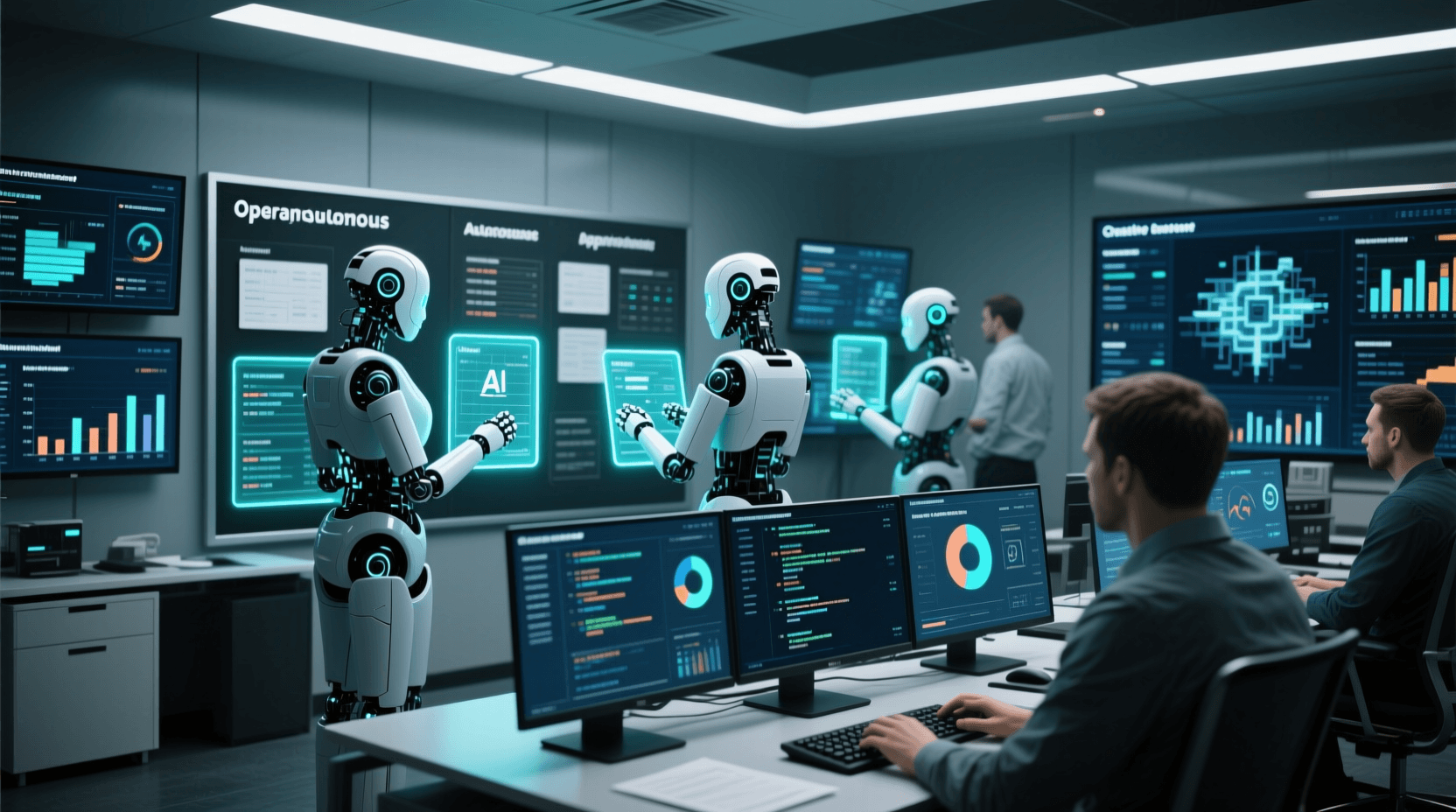
The next big shift in AI may not be better chat interfaces or faster code generation. It may be something less visible but far more disruptive: agents that organize their own work.
That matters because most AI workflows still depend on a hidden human tax. Someone has to open tabs, assign tasks, monitor progress, retry failures, and keep multiple tools pointed at the right objective. Even when AI appears autonomous, people are often acting as the scheduler, dispatcher, and quality controller behind the scenes.
If the new direction from OpenAI pushes agents to pull tasks directly from systems of record and keep working until completion, that signals a larger transition. We are moving from AI as a responsive assistant to AI as an operational layer.
The real bottleneck is coordination, not generation
For the past two years, the AI market has focused heavily on model capability: longer context windows, better reasoning, multimodal inputs, and more reliable coding. Those improvements matter, but they do not solve the everyday friction that teams actually feel.
The bigger problem is coordination overhead. In many companies, humans are still manually translating business intent into a sequence of prompts, approvals, retries, and handoffs. That makes AI useful, but not truly scalable.
A self-managing agent framework changes the equation. Instead of waiting for a person to decide what to do next, the agent can read from a task queue, inspect status, execute steps, and report outcomes. That sounds simple, but it is a profound design change. It treats AI less like a tool you operate and more like a worker you supervise through policy.
For AI users, this means the value of a platform will increasingly depend on whether it can stay productive without constant attention. For developers, it means orchestration is becoming as important as model quality.
The winners will be tools that connect action to accountability
Autonomy without structure is just chaos at machine speed. If agents are going to manage themselves, they need boundaries: task definitions, permissions, rollback paths, observability, and escalation rules.
This is where practical AI tooling becomes more important than flashy demos. Businesses do not need an agent that can do everything in theory. They need one that can do the right things repeatedly, safely, and in context.
That is why workflow and agent infrastructure platforms are so well positioned. Tools like Activepieces are especially relevant because they sit at the intersection of automation, integrations, and agent logic. An open-source approach also matters here. As companies hand more operational responsibility to AI, they will want visibility into how tasks are routed, when actions are triggered, and what guardrails are in place. The future of agents is not just autonomy; it is auditable autonomy.
For less technical teams, no-code and low-code orchestration could become the gateway to real AI leverage. The organizations that win may not be the ones with the most advanced models, but the ones that can turn business processes into agent-ready systems fastest.
Stable autonomy will beat impressive autonomy
There is a huge difference between an agent that completes a task once and an agent that can be trusted to run parts of a business day after day.
That is why reliability is about to become the most important product category in AI. As more companies experiment with self-directed agents, they will discover that uptime, consistency, exception handling, and controlled delegation matter more than novelty.
This is the appeal of platforms like SureThing.io, which positions itself around stable, unsupervised business operation. That framing is not just marketing language; it points to where enterprise demand is heading. Teams do not merely want AI that can assist. They want AI that can own recurring work without becoming another source of operational anxiety.
In practice, this will create a new purchasing standard for AI tools: not "What can it generate?" but "What can it reliably run?"
Creative and operational AI are starting to converge
An overlooked part of this trend is that self-managing systems will not stay confined to engineering or back-office operations. As orchestration improves, creative workflows will also become more autonomous.
Imagine an agent that not only tracks campaign tasks, but commissions assets, drafts variants, routes approvals, and updates downstream systems automatically. In that world, content generation tools stop being standalone apps and become components inside larger autonomous pipelines.
That is where tools like OpenAI Sora fit into the bigger picture. Even though many people think of generative media tools as isolated creative products, their long-term role may be as callable capabilities inside agent-driven workflows. A video model is useful on its own; it becomes transformative when an agent can invoke it at the right moment, for the right audience, under the right business rules.
What developers should do next
If this model of self-managing agents gains traction, developers should shift attention from prompt craftsmanship toward systems design.
The key questions become:
- How are tasks discovered and prioritized?
- What permissions does the agent have?
- How is success measured?
- When does the system ask for human review?
- What happens when multiple agents conflict or duplicate work?
The most valuable AI builders will be the ones who can answer those questions clearly.
The human role is changing, not disappearing
Despite the headline, human attention is not becoming irrelevant. It is becoming more strategic.
People will spend less time micromanaging individual AI sessions and more time defining goals, constraints, and quality thresholds. In other words, humans are moving up the stack.
That is the real significance of self-managing agents. They do not eliminate the need for people. They eliminate the need for people to act like middleware.
And that may be the most important productivity breakthrough in AI yet.