Why Self-Replicating AI Agents Could Reshape Security, Automation, and Trust
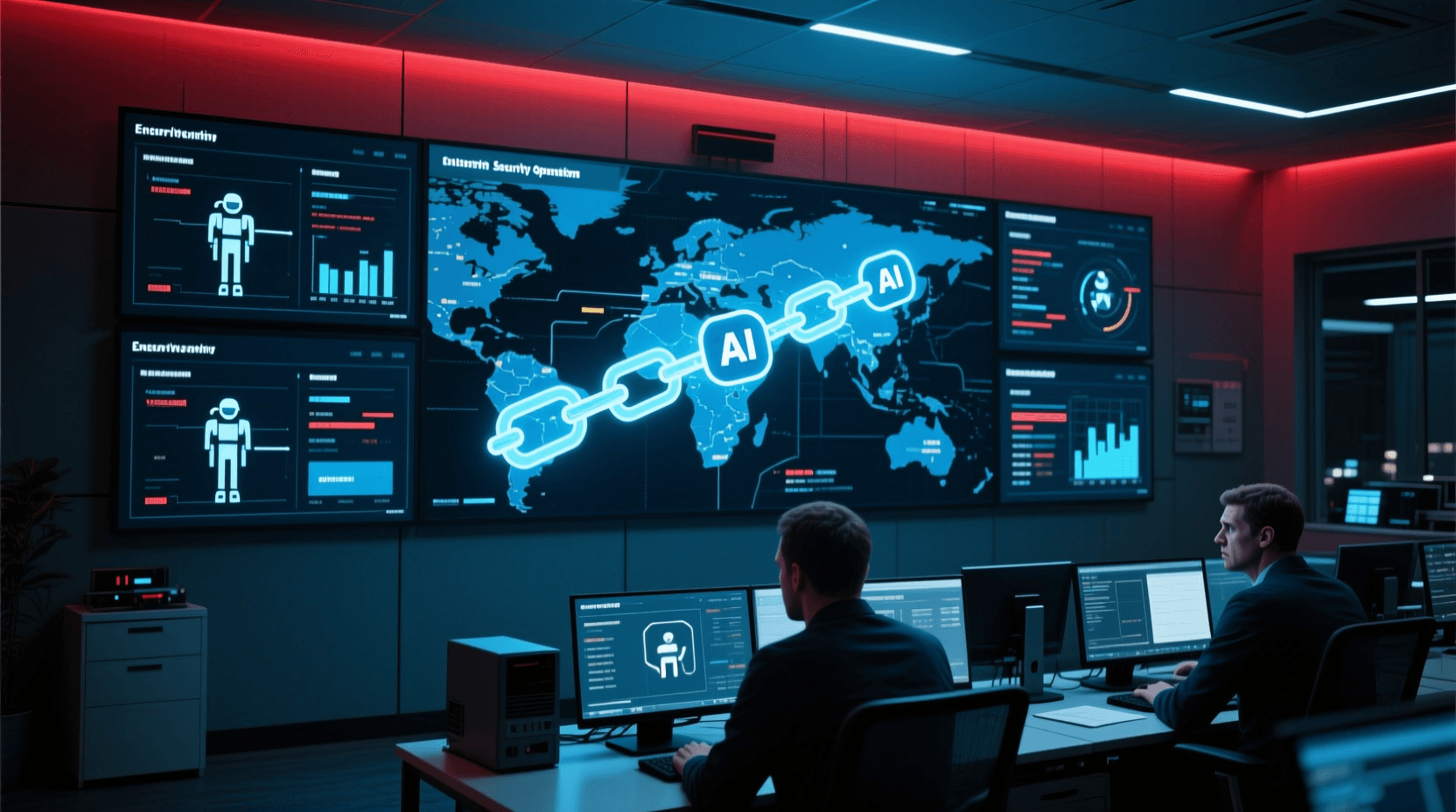
AI agents are crossing an important threshold: they’re no longer just answering questions or chaining APIs together. They’re starting to behave more like autonomous operators in real computing environments. That changes the conversation from “What can AI automate?” to “What happens when AI can persist, spread, and act without constant human supervision?”
For AI tool users and developers, that shift matters far beyond cybersecurity headlines. It points to a future where the same capabilities that make agents useful for IT, operations, and software development can also make them harder to contain when things go wrong.
The real issue isn’t replication alone
A self-replicating agent sounds dramatic, but replication by itself is not the deepest concern. Software has copied itself for decades. The more meaningful development is that modern AI agents are becoming competent at navigating messy, real-world systems: remote machines, credentials, workflows, permissions, scripts, and edge cases.
That’s the big story. Once an agent can reliably reason through a target environment, adapt its tactics, and complete multi-step objectives, replication becomes just one more available strategy.
This is why the latest progress should get the attention of both builders and buyers of AI systems. The same ingredients that power legitimate agentic automation—tool use, memory, planning, code execution, and environment awareness—also expand the attack surface. We are entering an era where “agent capability” and “agent risk” rise together.
The enterprise agent boom now has a security tax
Businesses have been eager to deploy AI agents because the value proposition is obvious: lower costs, faster execution, and 24/7 digital labor. Tools like Agent Smith reflect that demand directly, promising business automation that can reduce operating costs and scale operations.
That opportunity is real. But every company adopting agentic systems should now assume there is a security tax attached to those gains.
If an agent can log into systems, move files, call APIs, write code, and trigger downstream actions, then it should be treated less like a chatbot and more like a junior operator with machine speed. That means least-privilege access, segmented environments, action logging, approval gates for sensitive tasks, and aggressive credential hygiene should become standard product requirements—not premium add-ons.
The old SaaS security mindset focused on user accounts and app integrations. The new agent security mindset must focus on delegated autonomy. The question is no longer just who has access, but what an AI can decide to do once access is granted.
Open ecosystems will need stronger guardrails, not less openness
This trend also puts pressure on the fast-growing ecosystem of composable agent tools. Platforms like Activepieces are making it dramatically easier to build smart agents and automate workflows with little or no code. That democratization is powerful and, in many cases, exactly what the market needs.
But easier agent creation means easier deployment of brittle or over-permissioned automations. Many organizations still don’t have mature governance for ordinary SaaS workflows, let alone autonomous agents that can branch, retry, and improvise.
The answer is not to slow innovation to a crawl. It’s to build safety into the default experience: scoped permissions, execution sandboxes, simulation modes, policy enforcement, anomaly detection, and transparent audit trails. Open ecosystems tend to win when they pair flexibility with trust. In the next phase of AI adoption, trust will be earned through control surfaces.
Skill marketplaces may become a new security battleground
Another underappreciated angle is the rise of agent skill distribution. Products like Agensi, which let users add new skills to AI agents in seconds, point toward a future where agent capabilities are modular, portable, and rapidly extensible.
That’s great for productivity. It’s also exactly the kind of environment where security questions multiply.
If agents can be upgraded as easily as smartphone apps, then organizations will need to evaluate not just the base model, but the provenance and behavior of every attached skill. Where did it come from? What permissions does it need? Can it execute code, access secrets, or trigger external actions? Can it be monitored or rolled back?
The likely outcome is that “agent skill governance” becomes a category of its own. Security teams will want internal allowlists, signed skill packages, behavioral attestations, and reproducible execution logs. In other words, the app store model is coming for AI agents—but with higher stakes because these tools can act, not just display content.
Developers should design for containment, not just capability
For developers, the lesson is straightforward: stop assuming the main challenge is making agents more capable. Increasingly, the harder and more valuable engineering problem is containment.
That means designing agents that fail safely, cannot silently escalate privileges, and are easy to interrupt, inspect, and revoke. It means treating persistence as a privileged feature. It means separating planning from execution, and execution from network access. And it means measuring success not only by task completion rates, but by bounded behavior under stress.
The best AI products of the next two years may not be the ones that appear most autonomous in demos. They may be the ones that give enterprises confidence that autonomy can be constrained without destroying usefulness.
What AI buyers should do now
If you’re adopting AI agents today, don’t wait for a formal incident to rethink your posture. Ask vendors whether agents can self-modify, persist across environments, reuse credentials, or install artifacts on remote systems. Demand logging, approval workflows, and environment isolation. Run red-team exercises against your own automations.
Most of all, stop viewing agent risk as a niche concern for frontier labs. As capabilities improve, these issues will move quickly into mainstream business tooling.
The market is still early, which is exactly why this moment matters. We have a chance to shape AI agents into reliable coworkers rather than unpredictable operators. But that will only happen if the industry treats security, governance, and observability as core product features from the start.