Why Smaller AI Infrastructure Wins When Bigger Models Get Easier to Run
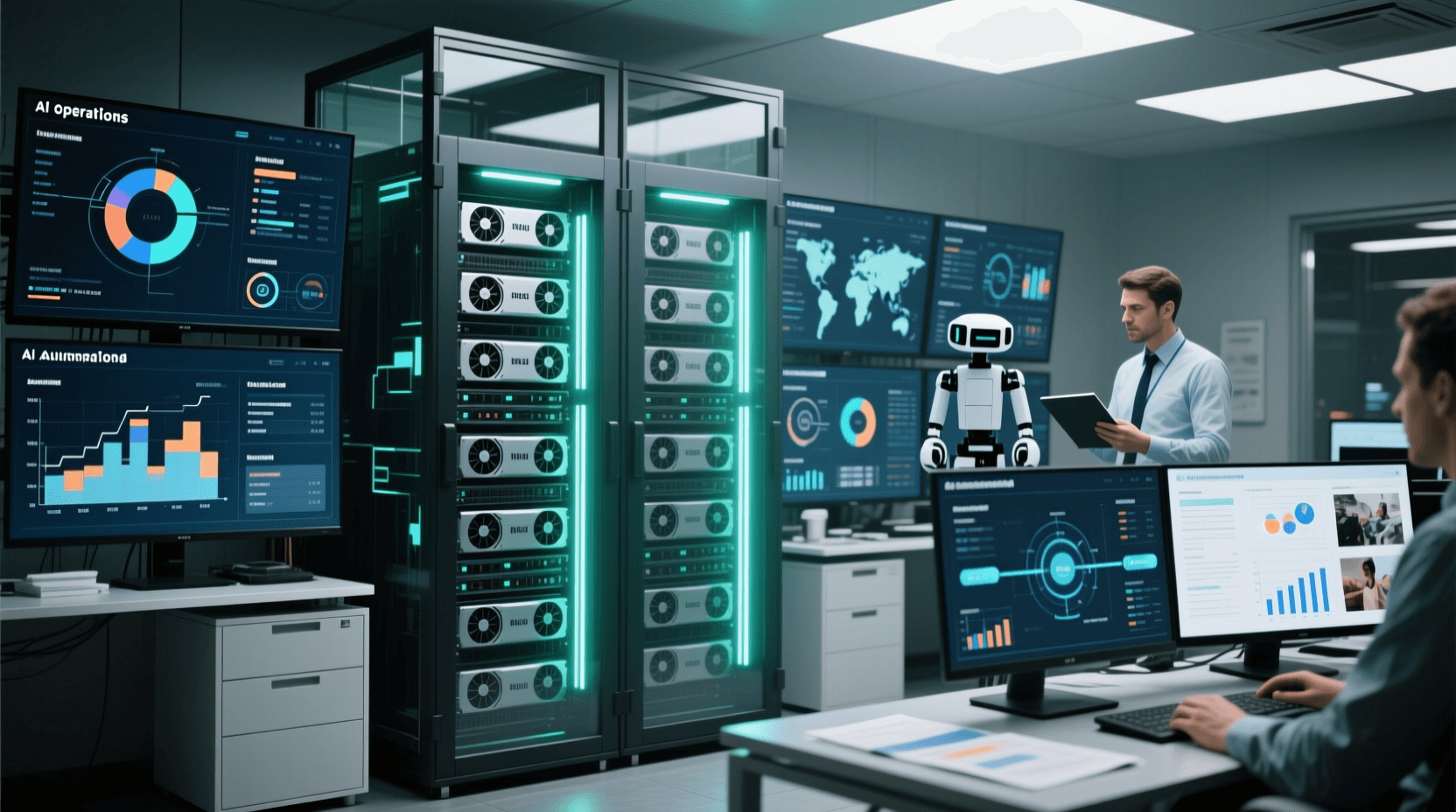
The most important part of the latest wave of large-model releases isn’t the parameter count. It’s the collapsing distance between “frontier-scale” capability and practical deployment.
For AI teams, that changes the conversation. The question is no longer just, Which model is best? It’s increasingly, Which model can we actually operate inside a real product, with acceptable latency, cost, and control?
That shift matters far more than leaderboard bragging rights.
The new bottleneck is orchestration, not raw model access
As more powerful open and open-weight models become feasible to run on relatively compact hardware footprints, the competitive edge moves up the stack. Model access alone is becoming commoditized. What remains hard is everything around it: routing, evaluation, fallback logic, privacy boundaries, tool use, and workflow design.
In other words, once a very large model can fit into a deployment profile that serious companies can tolerate, the differentiator becomes orchestration.
This is especially true for agentic workflows. Agents don’t just need a smart base model. They need systems that can decide when to reason deeply, when to act quickly, when to call tools, and when to hand off to a different model entirely. A single model may be impressive, but production systems rarely stay single-model for long.
That’s why platforms like LLMWise are increasingly relevant. If developers can compare, blend, and route across multiple leading models without locking themselves into one vendor’s assumptions, they can optimize around the actual task instead of the hype cycle. In practice, many teams will discover that “best model” is a misleading concept. The best model for multilingual extraction is not always the best one for coding, long-context synthesis, or customer support compliance.
Open-weight progress raises the bar for proprietary APIs
When large, capable models become easier to self-host or deploy in controlled environments, API-first vendors face a new kind of pressure. It’s no longer enough to sell intelligence. They also have to sell convenience, reliability, compliance, and ecosystem fit.
That’s healthy for the market.
For users, it means more leverage. If a company can run a powerful model in-house for sensitive workloads, it can reserve external APIs for tasks where the economics or capabilities are clearly better. This hybrid strategy is likely to become standard: local or private deployment for governed workflows, external model APIs for burst capacity, specialty tasks, or rapid experimentation.
That’s where a second approach from LLMWise makes sense. Auto-routing across GPT, Claude, Gemini, and others reflects the reality that modern AI stacks are becoming portfolio-based. Teams want optionality. They want to avoid overcommitting to one provider. They want the freedom to swap models as costs, quality, and latency shift.
The winners in this next phase won’t be the companies with the most models. They’ll be the ones with the best model governance.
Agentic workflows need predictable infrastructure more than flashy demos
There’s a big difference between a model that can perform well in a benchmark and a model that can support an always-on coding agent, research assistant, or business automation pipeline.
Agentic systems amplify infrastructure weaknesses. If inference is unstable, if queue times spike, if privacy guarantees are vague, or if performance varies under load, the entire workflow becomes brittle. A human user can tolerate one bad chatbot response. An autonomous or semi-autonomous agent chain cannot.
This is why dedicated infrastructure is becoming strategically important again. Developers building internal agents, coding assistants, or enterprise automation stacks increasingly care about consistency over novelty. They need environments where performance is predictable and data handling is clear.
That makes tools like Workhorse notable in this moment. Fixed-cost access to dedicated AI coding infrastructure speaks directly to a pain point many teams are now feeling: cloud AI experimentation is easy, but dependable AI operations are still hard. If agentic development becomes mainstream, developers will need less shared-demo infrastructure and more private, production-grade execution environments.
Multimodality and multilingual support are becoming table stakes for global products
Another signal in this market is that advanced reasoning can no longer be separated from multimodality and language coverage. For global software teams, AI products are expected to work across documents, screenshots, support tickets, voice transcripts, and mixed-language data.
That has two implications.
First, product teams should stop treating multilingual capability as a nice-to-have feature. It increasingly determines whether an AI workflow can scale internationally without spawning fragmented regional systems.
Second, multimodal reasoning changes the design space for agents. The next generation of business agents won’t just parse text prompts. They’ll inspect invoices, review UI screenshots, validate forms, interpret charts, and cross-check visual context against structured data. That opens up huge opportunities for tool builders, especially those focused on workflow automation, quality assurance, customer operations, and developer tooling.
What developers should do next
This moment calls for more disciplined AI architecture.
Don’t rebuild your stack around every new model release. Instead, design for model replaceability. Build evaluation pipelines. Separate orchestration from inference. Track cost per successful task, not cost per token alone. And assume your production system will use multiple models, not one.
The deeper lesson here is simple: as powerful models become easier to run, intelligence becomes more available, but not automatically more useful. Usefulness comes from system design.
For AI tool users, that means better options and lower dependency risk. For developers, it means the real opportunity is no longer just model access. It’s building the layer that turns raw model capability into reliable work.
That’s where the next durable AI businesses will be built.