Why Spec-First AI Development Is Becoming the Real Competitive Edge
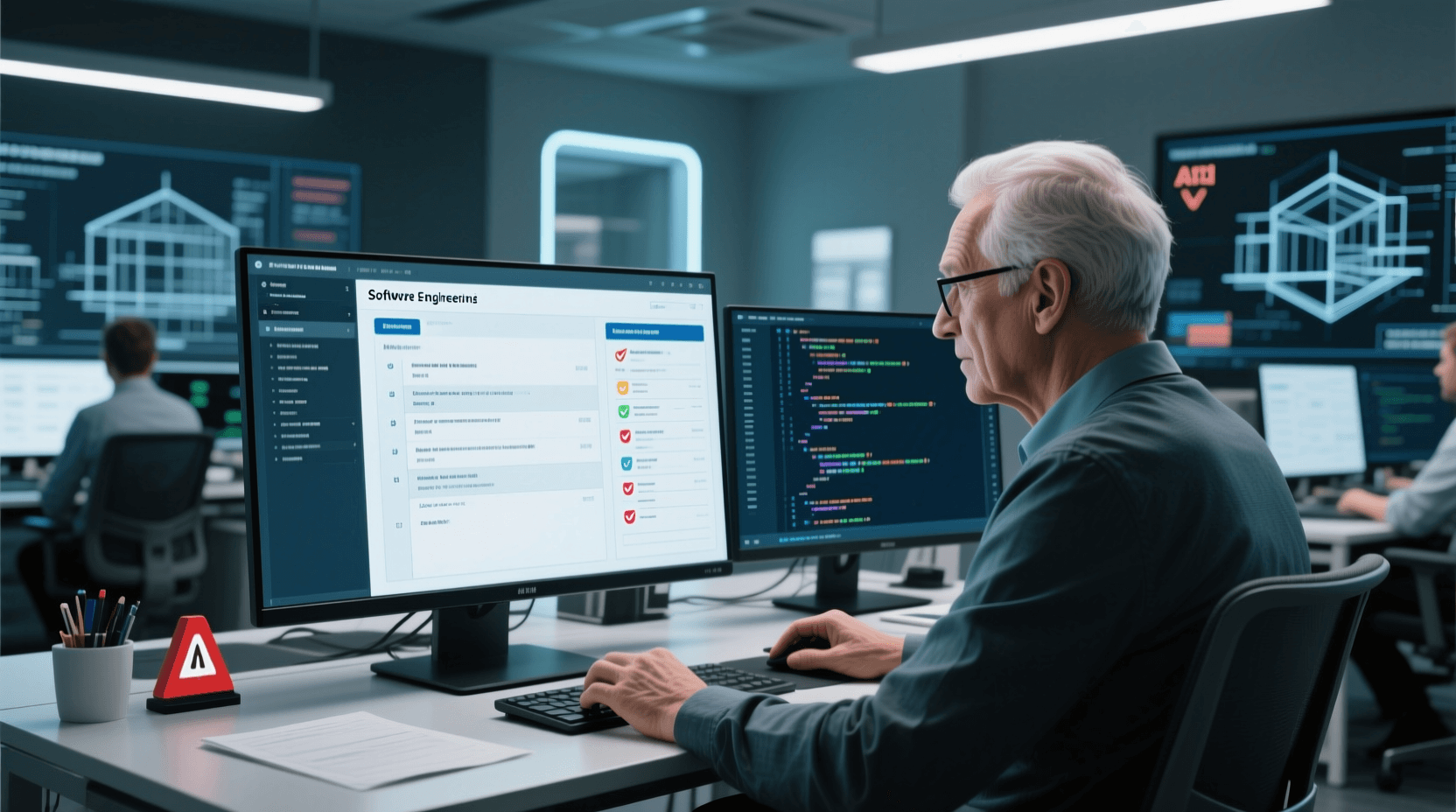
AI coding has spent the last two years obsessed with speed. Generate a function in seconds. Scaffold an app in minutes. Ship a prototype before lunch. That phase was useful, but it also created a bad habit: mistaking output velocity for engineering maturity.
What’s changing now is not just the quality of coding agents, but the expectations around how they’re used. The next wave of AI development is less about asking a model to "build something" and more about giving it a precise operational contract: requirements, constraints, architecture boundaries, test expectations, and security rules. That’s why spec-driven development is starting to matter more than prompt-driven improvisation.
For teams building real products, this is a major shift.
The end of “just vibe it” software
There will always be a place for fast, exploratory coding. It’s ideal for internal tools, experiments, and validating ideas cheaply. But once software touches customers, compliance, infrastructure, or revenue, ambiguity becomes expensive.
AI agents are extremely capable pattern matchers, but they are not mind readers. If the spec is weak, the agent fills in gaps with assumptions. Sometimes those assumptions are clever. Sometimes they create hidden technical debt that only surfaces during review, QA, or production incidents.
Spec-first workflows reduce that uncertainty. They turn AI from a creative guesser into a bounded executor. That distinction matters because most engineering pain does not come from writing code; it comes from misalignment between what was intended, what was implemented, and what can actually be maintained.
The teams that understand this are not using AI merely to type faster. They are using it to compress the path from intent to reliable implementation.
Why this matters for AI tool users
If you’re an individual developer or product builder evaluating AI coding tools, the key question is no longer, “Which model writes the slickest demo?” It’s, “Which workflow helps me preserve correctness as complexity grows?”
That’s a different buying criterion.
The most valuable AI tools in 2026 will likely be the ones that help users define structure before generation: acceptance criteria, dependency rules, task decomposition, test plans, rollback logic, and review checkpoints. In other words, the winning tools won’t just generate code. They’ll generate discipline.
This is also where discovery becomes a challenge. The AI tooling market is crowded with products that sound similar but behave very differently in practice. A broad discovery layer like Good AI Tools becomes useful because buyers need more than hype; they need a way to compare tools based on workflow fit, not just model branding.
A founder building an MVP, a platform engineer managing standards, and an agency shipping client work may all want “AI coding help,” but they need very different forms of control. Spec-driven development makes those differences visible.
Why this matters even more for developers and engineering leads
For engineering teams, spec-driven AI is really about organizational memory.
When requirements live only in chats and scattered prompts, every generated output becomes fragile. The next developer has to reverse-engineer intent from code. The next agent session starts from partial context. Reviewers end up validating not just implementation, but also reconstructing the original ask.
A structured spec changes that. It creates a durable artifact that survives handoffs, audits, and iteration. It also makes AI-generated work easier to govern.
This is especially important as teams begin mixing multiple agents into one delivery pipeline. You may use one tool for planning, another for implementation, another for test generation, and another for refactoring. In that world, interoperability matters. A marketplace model like Agensi points toward an interesting future: teams can extend coding agents with specialized skills without rebuilding their entire stack. That lowers the cost of adopting spec-driven workflows because capabilities can be plugged in rather than custom-built.
The bigger implication is that AI development is becoming modular. Instead of betting on one monolithic assistant, teams will assemble workflows from agent skills, validation layers, and domain-specific constraints.
Security is where spec-driven development proves its value
The strongest argument for spec-first AI development may not be productivity at all. It may be security.
Prompt-first coding often leaves security as a downstream concern: generate first, scan later. But by then, insecure assumptions may already be embedded in architecture, data handling, auth flows, or third-party integrations.
Spec-driven development creates an opportunity to shift security left in a meaningful way. If constraints around secrets management, input validation, dependency policies, and privilege boundaries are part of the spec, the agent can work inside safer rails from the start.
That’s where tools like SecVibe become highly relevant. AI-generated code needs more than a generic scanner. It needs context-aware oversight that understands the unique risks of machine-produced output and can catch issues in real time before they spread through a codebase. For teams scaling AI-assisted development, that kind of protection is quickly becoming table stakes.
The next competitive advantage is not generation, but governance
The AI coding market often frames competition around which assistant is smartest. That’s too narrow. Raw model capability is becoming only one layer of the stack.
The more durable advantage will come from systems that make generated code reviewable, reproducible, secure, and aligned with product intent. In practice, that means better specs, better orchestration, and better safeguards.
So the real story behind the rise of spec-driven development is this: AI is pushing software teams to become more explicit. That may sound less exciting than one-shot app generation, but it is far more useful.
The future of AI coding is not just faster building. It’s building in a way that survives contact with production.