Why Synthetic Personas Will Define the Next Generation of Localized AI Agents
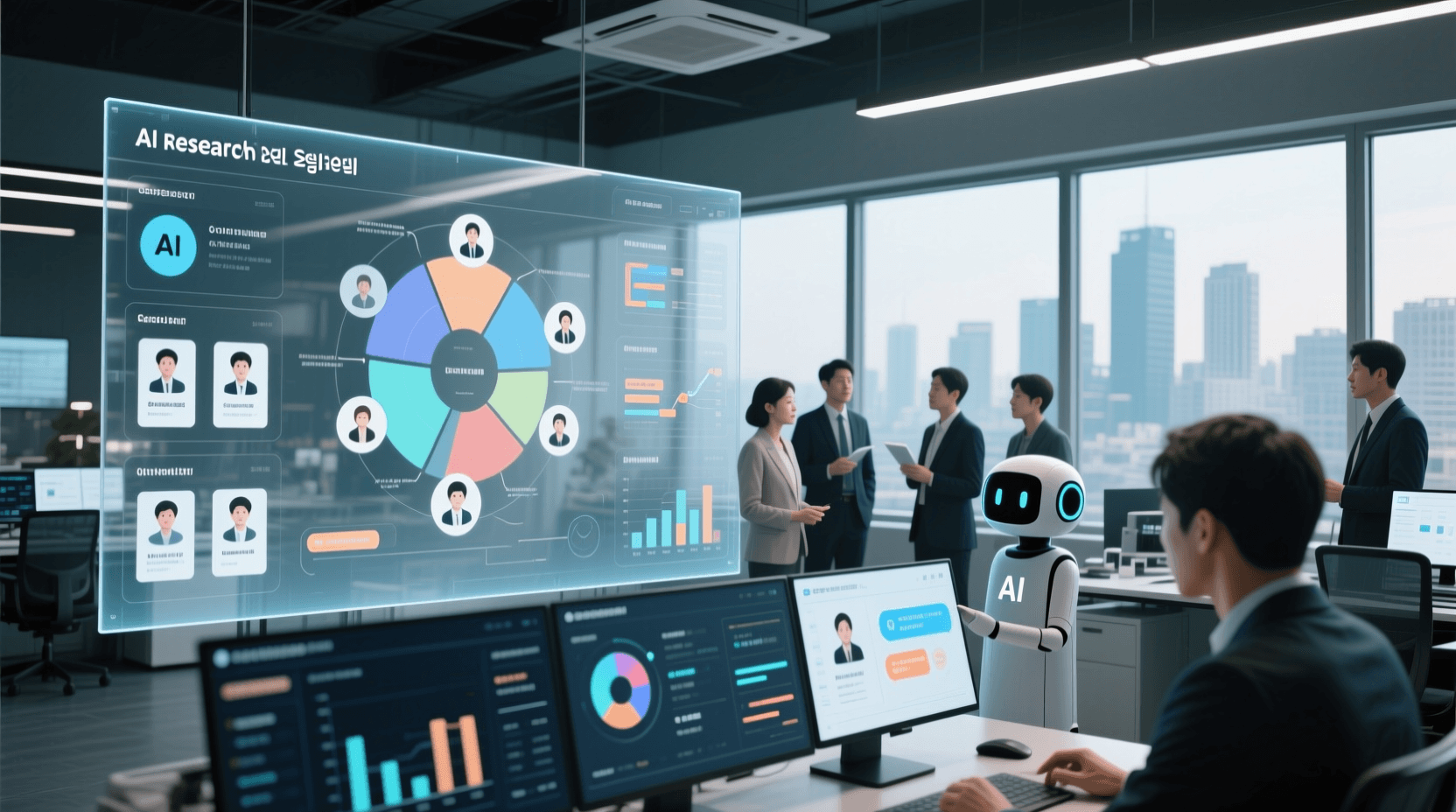
AI agents are getting better at sounding fluent, but fluency is not the same as cultural fit. That gap matters most when developers try to deploy assistants, companions, marketers, or customer-facing bots into specific regions. A Korean AI agent, for example, cannot be meaningfully “localized” just by translating prompts into Korean or fine-tuning on Korean text. If it does not reflect real demographic patterns, social norms, aspirations, and behavioral differences across age groups and contexts, it will feel generic at best and alien at worst.
That is why synthetic personas are becoming one of the most important building blocks in applied AI.
Localization is shifting from language to lived context
For years, AI localization was treated like an NLP problem: translate the interface, adapt the prompt, maybe add regional examples. But users do not interact with AI as dictionaries. They interact with it as if it were a social participant. That means the model is judged on tone, assumptions, values, timing, and relevance.
In practice, a Korean teenager in Seoul, a working parent in Busan, and a retiree in Daegu may all speak Korean, but they do not necessarily share the same media habits, spending behavior, digital trust levels, or conversational expectations. If an AI agent collapses those differences into a single “Korean user profile,” it stops being personalized and starts being stereotyped.
Synthetic personas offer a way out. Done well, they let teams test how an agent performs across a realistic spread of demographic segments before exposing real users to awkward or biased outputs. This is not just useful for research labs. It is becoming essential for startups building AI products in advertising, entertainment, education, healthcare navigation, and social experiences.
Synthetic personas are not fake users—they are testing infrastructure
There is a temptation to think of synthetic personas as fictional characters. That undersells their value. For developers, they are better understood as simulation infrastructure: structured, controllable stand-ins for real audience segments.
The real win is not that they “look human.” The win is that they let teams ask sharper product questions:
- Does this agent give different advice to different age cohorts in a sensible way?
- Does its tone shift appropriately by social context?
- Does it assume too much income, education, or urban access?
- Does it overfit to internet-native users while ignoring mainstream behavior?
- Does it produce respectful outputs around family, work, dating, status, and hierarchy?
Those questions matter far beyond Korea. But Korea is a particularly interesting case because it is digitally advanced, culturally fast-moving, and highly segmented by generation, platform behavior, and consumer taste. In markets like that, shallow localization breaks quickly.
The commercial impact will show up first in marketing and social AI
The first companies to benefit from demographic grounding will not necessarily be the ones building foundation models. They will be the ones building tools that depend on resonance.
Take creative testing. A campaign that performs well with one audience segment can fail badly with another, even within the same country. Tools like POPJAM point toward where this is going: simulated audiences that help teams discover which hooks, angles, and creative concepts actually connect. The broader lesson is that synthetic personas are not only useful for evaluating chatbot responses—they can also shape ad messaging, product onboarding, and feature prioritization.
This same pattern applies to emotionally driven AI products. A companion app, for instance, needs more than linguistic fluency. It needs to understand how different users express vulnerability, humor, affection, and boundaries. Products like AI Angels, which focus on conversational depth and emotional engagement, highlight why persona realism matters. If the underlying agent is not grounded in believable social expectations, “emotional intelligence” quickly turns into uncanny roleplay.
And then there is identity simulation, one of the most commercially explosive and ethically fraught categories in AI. With tools like Celebrity AI, hyper-realistic voice and video generation is becoming accessible to more creators and marketers. But realism at the media layer raises the stakes for realism at the audience layer. If you can generate highly persuasive content featuring recognizable personas, you also need stronger demographic grounding to predict how different groups will perceive, trust, reject, or misinterpret that content.
Developers should treat personas as dynamic, not static
One mistake teams will make is freezing a persona set and treating it as objective truth. Real demographics are not static. Preferences shift. Slang changes. economic anxiety rises and falls. Platform norms mutate. A synthetic persona system is only useful if it is continuously refreshed by current signals and audited for drift.
That suggests a new product discipline for AI teams: persona ops. Not just prompt ops or model ops, but ongoing maintenance of the simulated user layer that sits between the model and the market.
The best teams will build feedback loops where synthetic personas are used before launch, compared against real-world usage after launch, and updated when gaps appear. That is how AI products become regionally intelligent instead of merely translated.
The bigger opportunity is trust
Grounding AI agents in real demographic structure is not only about conversion rates or engagement metrics. It is about reducing the subtle failures that make users feel unseen. When an AI understands context, it feels more useful. When it respects demographic nuance, it feels safer. And when it can be tested against diverse synthetic populations before rollout, developers gain a practical way to catch blind spots early.
The future of AI agents will not be won by the systems that speak the most languages. It will be won by the systems that understand how people actually live inside those languages.
Synthetic personas are emerging as the bridge between model capability and market reality. For AI builders, that bridge may soon become mandatory.