Why Synthetic Worlds Are Becoming the Next Big AI Data Economy
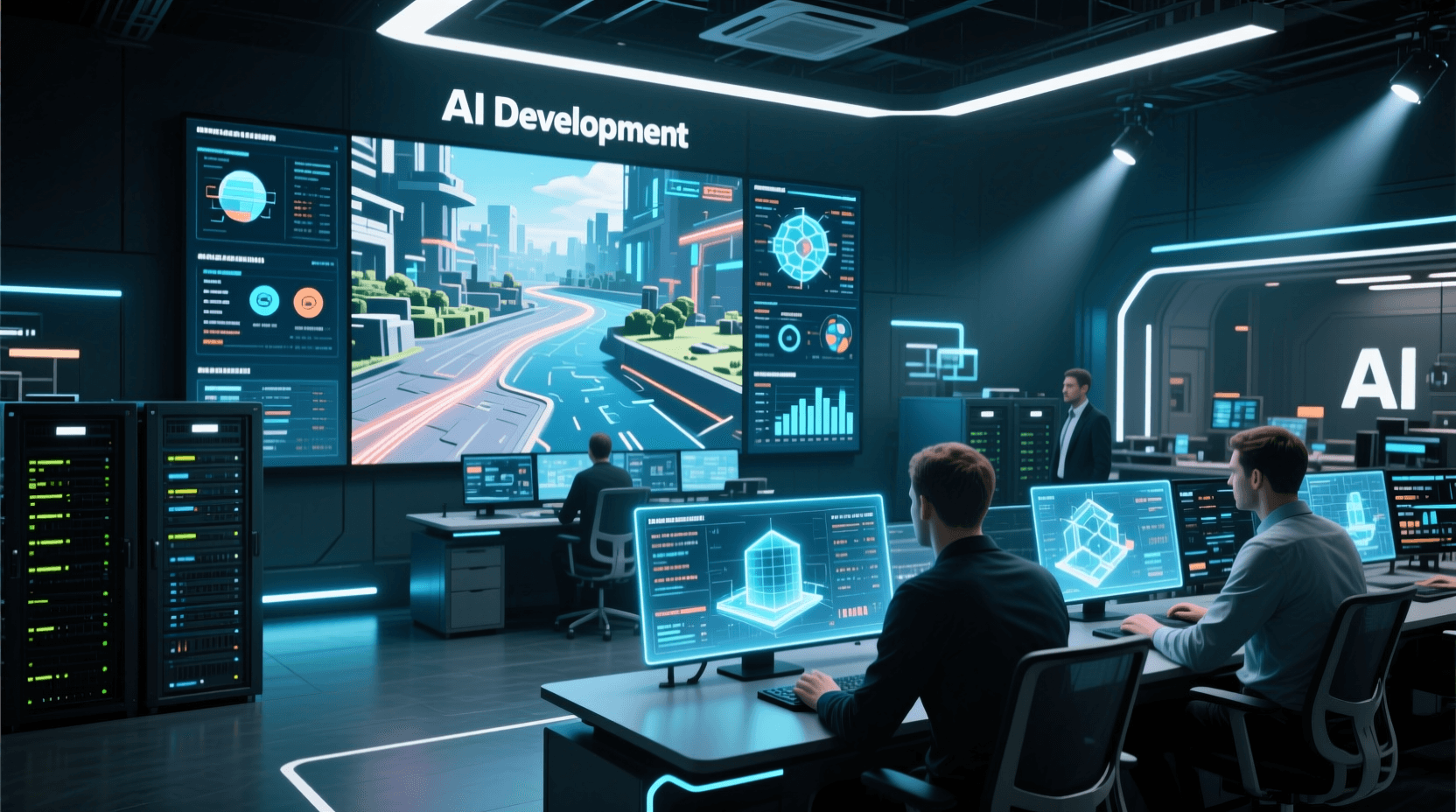
The race to build smarter AI is starting to look less like a model war and more like a supply-chain war.
For years, the conversation centered on bigger models, faster chips, and more capital. But a quieter bottleneck is becoming impossible to ignore: access to clean, licensed, high-signal training data. The latest push to turn video game environments into sellable AI training assets signals something bigger than a niche business model. It suggests that virtual worlds may become one of the most important raw materials in the next phase of AI development.
Why game data matters more than most people realize
Game studios don’t just create entertainment. They create structured simulations of reality: spaces with physics, object interactions, lighting changes, navigation paths, character behaviors, and millions of edge cases that can be replayed on demand. That makes game-generated data uniquely valuable for world models, robotics simulation, autonomous systems, and multimodal AI.
Unlike scraped internet content, game data can be organized, labeled, and licensed from the start. That matters because the AI industry is moving into an era where provenance is no longer optional. Enterprises want to know where training data came from. Regulators increasingly care. And model builders who once treated “more data” as the only goal are now learning that legally usable data can be more strategically important than sheer volume.
For developers, this changes the economics of content creation. A game asset is no longer just a visual object or gameplay component. It can become a reusable data product with downstream AI value.
The rise of data-as-an-asset for creators and studios
This shift could create a new revenue layer for game companies, especially mid-sized studios sitting on years of under-monetized environments, motion systems, and interaction logs. In practical terms, a studio might one day earn from players, from licensing IP, and from licensing simulation-grade data to AI companies.
That opens an interesting strategic question: which studios are best positioned to benefit? Not necessarily the biggest ones. The winners may be companies with highly structured assets, clear rights ownership, and pipelines that make their data exportable.
This is where the broader AI tooling ecosystem becomes important. Teams that can standardize, catalog, and package data will have an advantage over teams that simply possess a lot of it. Marketplaces such as Opendatabay point toward a future where datasets are treated more like financial assets: discoverable, tradable, and compliance-aware. If that model spreads from text and tabular data into simulation and 3D environments, we may see a much more liquid market for specialized AI training inputs.
From 2D content to world-ready assets
There’s also a creative pipeline angle that shouldn’t be overlooked. If AI labs increasingly value 3D and simulation-friendly datasets, then the tools used to generate those assets will matter just as much as the marketplaces that sell them.
For indie developers and smaller studios, creating large 3D libraries has historically been expensive. That barrier is falling. Tools like Imgto3D.ai show how quickly static visual content can be transformed into usable 3D assets. That is significant beyond gaming. It means a much wider group of creators can produce world-model-friendly content without building every object from scratch.
The long-term implication is that AI data production may become decentralized. Instead of only major game studios supplying virtual-world data, thousands of smaller creators could generate niche environments, object sets, and interaction-ready scenes. That would diversify the training ecosystem and reduce dependence on a handful of dominant data holders.
Cheap inference will accelerate demand for premium data
There’s a second-order effect here: as model access gets cheaper, the value of differentiated data rises.
When inference and experimentation become more affordable through services like Vidgo API, more startups can afford to test world models, multimodal agents, and simulation-driven products. Lower model costs don’t eliminate competition; they intensify it. If everyone can access strong models, then proprietary workflows and proprietary data become the real moat.
That’s why the market for licensed game data is likely to expand quickly. Cheap model access creates more buyers. More buyers create pressure for higher-quality, more specialized datasets. And that, in turn, rewards creators who can supply data that is structured, legal, and operationally useful.
What AI builders should do next
For AI developers, the lesson is straightforward: stop thinking of data sourcing as a back-office procurement task. It is now a product strategy decision.
If you’re building world models, embodied AI, synthetic media systems, or 3D generation tools, your competitive edge may come less from model architecture and more from exclusive access to environments and interactions others can’t replicate. Partnerships with game studios, 3D creators, and data marketplaces could be just as important as GPU budgets.
For game developers, the opportunity is equally clear, but it comes with a warning. Not all data will be valuable, and not all licensing deals will be wise. Studios need to understand what rights they actually own, what player-generated content may complicate resale, and whether selling data today could empower future competitors tomorrow.
The bigger shift: AI is building an economy around simulated reality
The most important takeaway is that AI is no longer feeding only on the open web. It is increasingly turning to constructed, controlled, and commercially licensed environments. That is a major transition.
In the next few years, the companies that shape AI may not just be the ones with the best models. They may be the ones that control the best worlds: the richest simulations, the cleanest interaction data, and the most reusable 3D assets.
The web trained the first wave of generative AI. Virtual worlds may train the next one.