Why the Next AI Platform Battle May Happen on Rings, Glasses, and Pendants
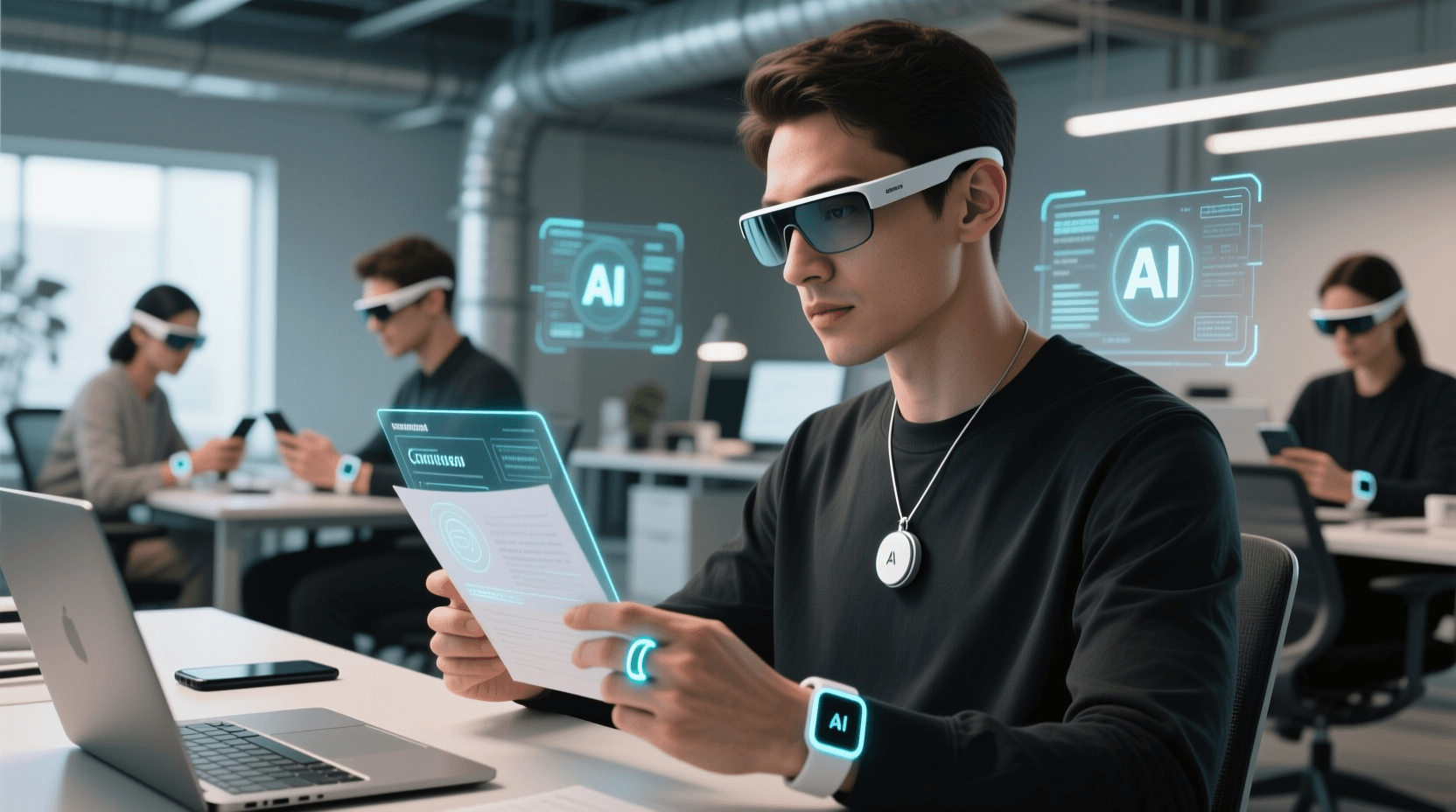
The most interesting part of the new wave of AI hardware is not the gadget itself. It’s the software layer that decides whether these devices become useful companions or just expensive accessories.
A company betting on a platform for AI gadgets signals something bigger than another wearable launch. It suggests the market is moving past the question of whether AI can live in physical devices and toward a more important one: how will all these devices work together, learn from context, and deliver value without becoming annoying, invasive, or fragmented?
AI hardware is becoming a distribution problem
We’ve already seen what happens when a new hardware category appears before its software ecosystem is ready. Early devices generate hype, but users quickly discover that novelty is not the same as utility. AI wearables face an even harder challenge because they are competing for continuous access to our attention, our environment, and in many cases our bodies.
Glasses, rings, pendants, earbuds, and other ambient devices all promise "frictionless AI." But friction never disappears; it just moves. If the hardware is tiny, the burden shifts to software orchestration, context awareness, permissions, battery management, and user trust.
That is why a platform approach matters. The winning layer may not be the smartest model or the prettiest device. It may be the operating system-like experience that lets multiple form factors share memory, intent, and actions. A ring might detect stress, glasses might surface contextual information, and a pendant might handle voice interaction. On their own, each is niche. Together, they start to look like a personal AI system.
Developers should pay attention to the middleware opportunity
For AI developers, this trend opens a major design space. Most builders still think in terms of chat apps, copilots, or single-device assistants. But AI gadgets create demand for a new middleware stack: identity, memory, event routing, multimodal inputs, privacy controls, and action frameworks.
In practical terms, developers will need to answer questions like:
- Which device should respond in a given moment?
- What context can be shared across devices?
- How should an AI escalate from passive observation to active intervention?
- What data should stay on-device versus sync to the cloud?
This is where software platforms can become the real moat. The companies that solve these orchestration problems will be more valuable than many of the gadget brands themselves.
There is also a content discoverability angle. As AI assistants increasingly answer questions and make decisions on behalf of users, developers and brands will need better visibility into how they are represented across AI surfaces. Tools like AEO Tool become especially relevant here, because citation tracking and answer reliability will matter not just in browser-based AI search, but in wearable and ambient AI experiences where users may never see a traditional results page.
The best AI gadgets won’t feel like gadgets
The biggest mistake in AI hardware is trying to make the device the hero. Consumers do not want another object demanding maintenance, charging, and setup unless it creates obvious value. The best AI gadgets will disappear into routines.
That creates opportunities for products focused on emotional and behavioral support rather than just information retrieval. Imagine a wearable ecosystem that notices cognitive overload, changing energy levels, or signs of burnout, then turns that insight into useful action. That kind of flow pairs naturally with tools like Eiren AI, which bridges reflection and execution through journaling, task creation, and custom meditations. In a multi-device AI future, wellness apps like this could become more powerful by receiving real-world signals from wearables instead of relying only on manual input.
This is an important shift. AI hardware will not succeed merely by answering more questions. It will succeed when it helps users regulate attention, manage stress, and move from intention to habit.
Vertical use cases may beat general-purpose assistants
Another likely outcome is that specialized workflows will outperform broad consumer promises. General AI companions sound exciting, but users often adopt hardware for very specific jobs. A designer might want smart glasses for visual prototyping, a runner might want a ring for recovery insights, and a stylist might want an AI-assisted wearable workflow tied to fashion creation and presentation.
That’s where domain-specific AI products can plug into the gadget ecosystem. For example, The New Black AI shows how creative AI can streamline fashion ideation and visual production without the overhead of traditional shoots. If AI wearables become practical interfaces for capturing inspiration, viewing generated looks, or collaborating in real time, vertical creative tools like this could benefit from entirely new interaction models.
In other words, AI hardware may not create one giant winner. It may create a network of specialized software experiences optimized for moments, industries, and contexts.
The real challenge is trust, not intelligence
The market will be tempted to measure progress by model capability, but the adoption bottleneck is trust. A device that listens, watches, infers mood, and nudges behavior has to earn permission continuously. Users need to know what is collected, what is remembered, and what triggers action.
For developers, that means privacy UX is no longer optional. Consent must be dynamic. Memory must be editable. Recommendations must be explainable. If AI gadgets get this wrong, consumers will reject them no matter how impressive the demos look.
What this means next
The emergence of software platforms for AI gadgets is a sign that ambient computing is becoming real enough to build infrastructure around. That’s a meaningful transition for the market.
For users, it means the next generation of AI may feel less like opening an app and more like living with a network of subtle assistants. For developers, it means the biggest opportunities may sit above the model layer: orchestration, trust, vertical workflows, and answer visibility.
The gadget race will get the headlines. But the companies shaping how these devices coordinate, cite, guide, and integrate into daily life may end up defining the category.