Why the Oscars’ AI Crackdown Matters More to Creators Than Hollywood
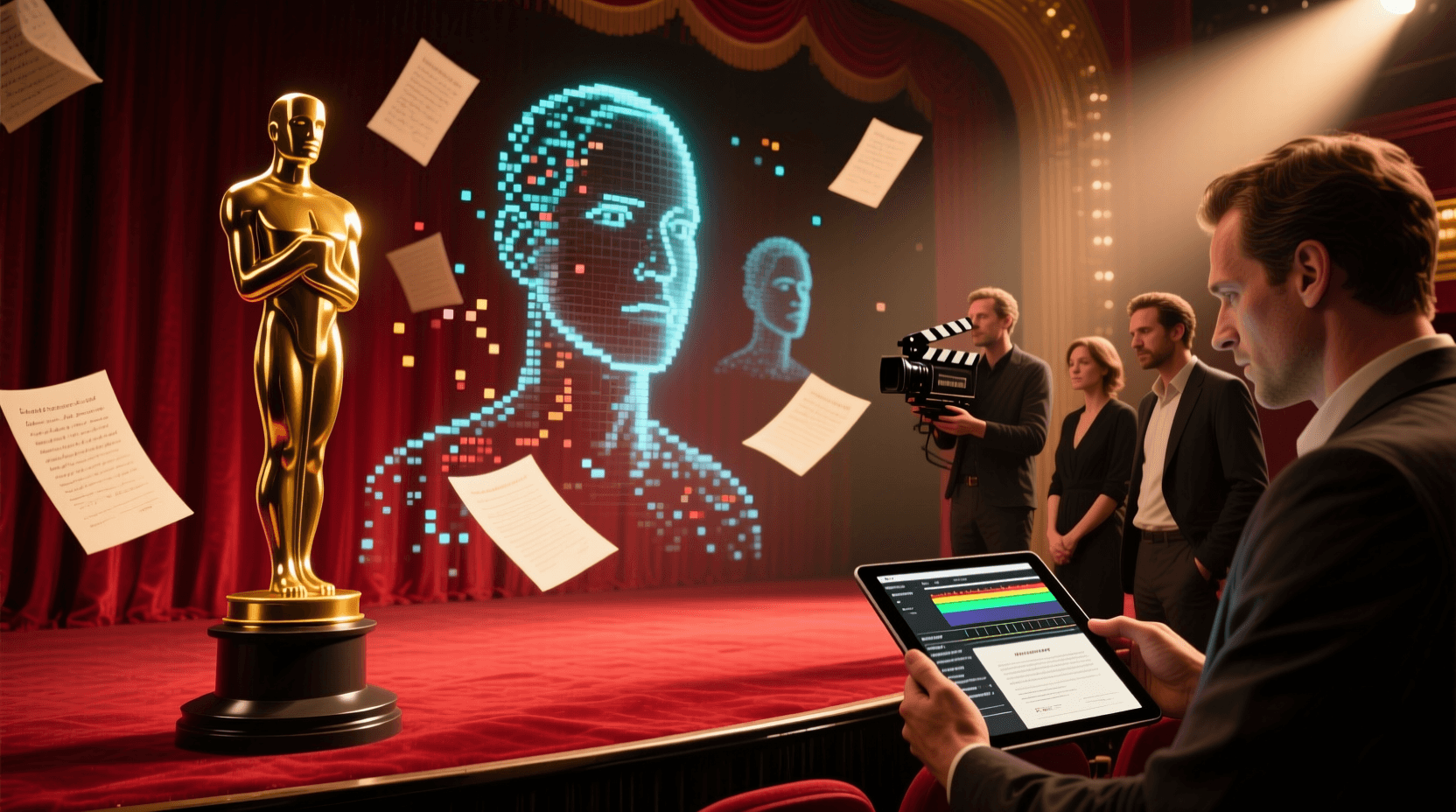
The Academy’s decision to draw a hard line around fully AI-generated actors and scripts is easy to read as a Hollywood story. It’s bigger than that.
For anyone building, buying, or experimenting with AI media tools, this is really a signal about where institutions are trying to preserve the value of human authorship. Awards bodies are not just judging output quality anymore. They’re judging provenance: who made it, how it was made, and whether a human creative role remained central.
That distinction will shape product design, marketing claims, and even the kinds of startups that get funded over the next few years.
The real issue isn’t realism — it’s authorship
We’ve already crossed the threshold where synthetic performances can look convincing enough for mainstream audiences. The technical debate is basically over. Tools can now generate faces, voices, dialogue, and performances that are good enough to be useful, and sometimes good enough to be commercially viable.
So the Oscars’ move is not a rejection of quality. It’s a rejection of replacement.
That matters because many AI companies have been selling two different futures at once. One is augmentation: AI helps writers, editors, designers, and directors move faster. The other is substitution: AI can eliminate the need for those people altogether. The Academy is effectively saying that, for its highest form of cultural recognition, substitution has crossed a line.
For developers, that creates a strategic fork. If your product messaging sounds like “replace the cast,” “skip the writer,” or “generate the whole production automatically,” you may gain short-term attention but lose access to prestige markets, enterprise partnerships, and creator trust. If your product helps humans retain authorship while using AI as leverage, you’re likely in a much safer lane.
Expect a new premium on “human-in-the-loop” workflows
The next wave of AI media products will likely compete less on raw generation and more on controllability, auditability, and collaboration.
That means features like editable timelines, source tracking, consent records, and revision histories may become just as important as realism. In other words, the winning tools may not be the ones that generate the most with one click, but the ones that best document human intent.
This is especially relevant for digital human platforms. A tool like Omnihuman AI is compelling because it can generate realistic character videos from images, audio, or scripts. But in a post-crackdown environment, the differentiator won’t just be lifelike output. It will be whether users can prove who supplied the script, who approved the likeness, and how the final performance was directed.
The same logic applies to synthetic celebrity content. Celebrity AI showcases the commercial appeal of hyper-realistic celebrity videos and voice cloning. That category will keep growing because demand is obvious. But it also sits directly inside the zone where consent, licensing, and attribution become existential. The more realistic the imitation, the less this is about novelty and the more it becomes about rights management.
If the entertainment industry is moving toward stricter boundaries, AI startups in this space should assume those boundaries will spread to ad platforms, app stores, distributors, and payment providers too.
Awards rules become product rules faster than people think
It’s tempting to dismiss awards eligibility as symbolic. But symbolism creates standards, and standards shape software.
When a major institution says AI-generated acting or writing does not qualify, it gives studios, agencies, insurers, and legal teams a framework they can operationalize. Soon that turns into contract clauses, disclosure requirements, and procurement checklists.
For AI builders, this means “can we generate it?” is no longer the only question. “Can our customers safely use this in regulated or reputation-sensitive contexts?” becomes just as important.
This will likely split the market into two tiers:
- Efficiency tools for internal ideation, prototyping, previz, and low-risk content.
- Rights-aware creative systems for commercial release, public campaigns, and prestige projects.
The second tier is where long-term defensibility probably lives.
This could actually help serious AI creators
Paradoxically, stricter rules may improve the AI creative ecosystem.
Why? Because they force a clearer distinction between cheap synthetic content and intentional AI-assisted artistry. That’s good for creators who want to use AI without being accused of outsourcing the entire act of creation.
Consider adjacent visual industries like fashion and product marketing. The New Black AI helps brands create AI models for clothing, jewelry, and accessories without traditional e-commerce photoshoots. That’s a strong example of AI replacing a costly production process while still leaving room for human art direction, brand taste, merchandising strategy, and final selection.
That model — AI as production multiplier, not sole author — is probably the most sustainable pattern across creative industries.
In other words, the future isn’t “AI or humans.” It’s “AI where humans remain legible.”
The bigger takeaway for developers and users
If you build AI media tools, design for traceability, permissions, and editorial control now. Don’t wait for policy to force it.
If you use AI tools, assume that invisible provenance will become visible. Clients, platforms, and audiences will increasingly ask not just whether content is good, but whether it is accountable.
The Oscars aren’t banning AI from culture. They’re trying to define the terms under which culture still recognizes a creator.
That’s the real story here. Not that AI can’t make a performance. It’s that institutions are starting to decide when a performance still counts as human work.
And for the AI industry, that may be the rule that matters most.