Why Tiny Optics Could Be the Real Battleground for AI Glasses
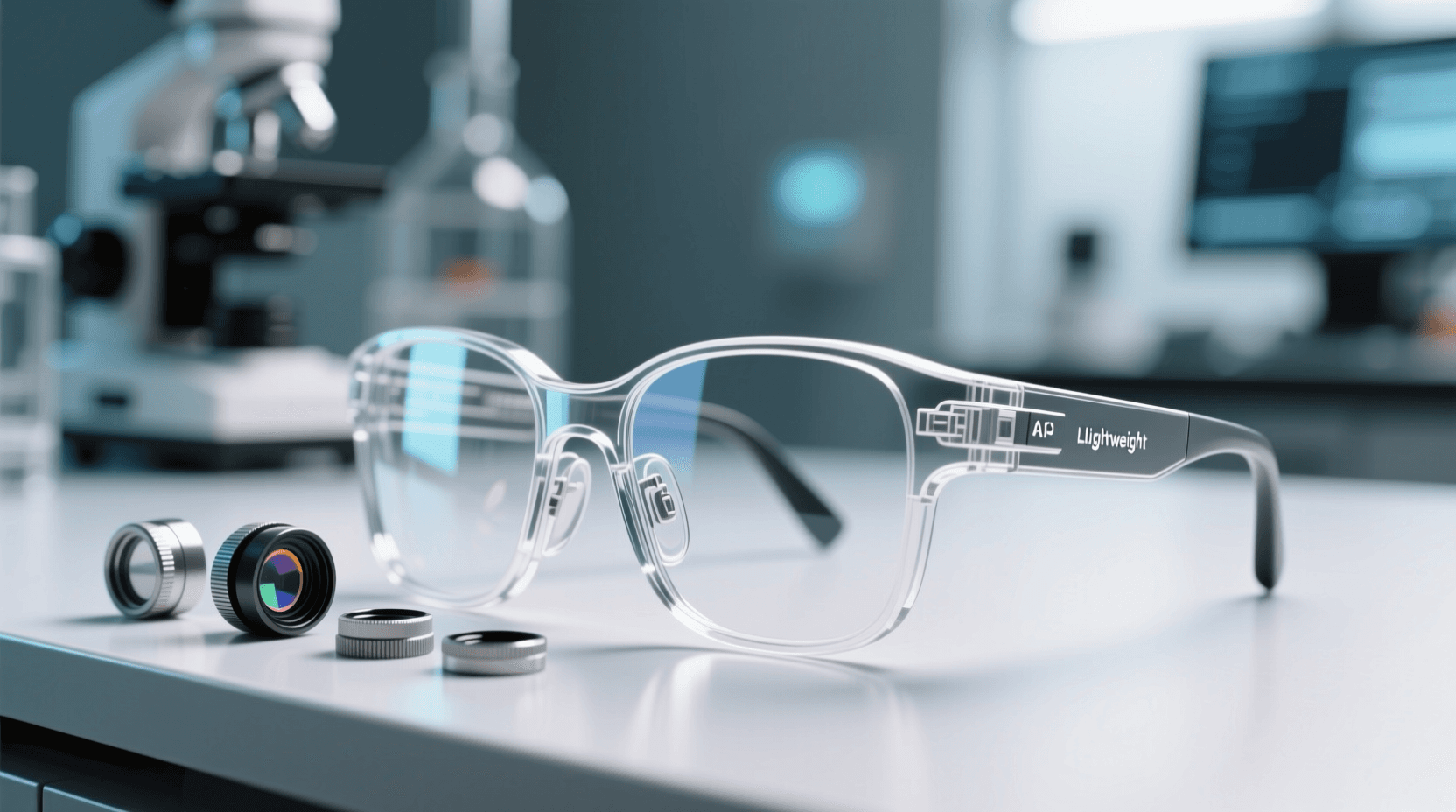
AI glasses are often discussed as if the biggest challenge is the model: better assistants, better transcription, better translation, better memory. But the next wave of wearable AI may be decided by something far less glamorous than a foundation model leaderboard. It may come down to optics.
That’s why the growing attention around companies building miniature display and lens systems matters. If AI is going to move from phones into everyday eyewear, the winners won’t just be the brands with the smartest software. They’ll be the ones that solve the physical experience of wearing intelligence on your face for hours at a time.
The AI glasses market has a hardware bottleneck
For most users, the dream of AI glasses is simple: discreet help, always available, without pulling out a phone. Real-time captions, navigation, object recognition, reminders, contextual search, and subtle notifications all sound compelling. But the practical barriers are brutal.
Glasses have almost no room for compromise. They need to be light, stylish enough to wear in public, power-efficient, and comfortable. They also need displays that are readable without being distracting, cameras that are useful without feeling invasive, and thermal performance that doesn’t make the frame unpleasant to wear.
This is why miniature optical systems are more than a component story. They are a product-defining story. If the optics are bulky, dim, expensive, or hard to manufacture at scale, the entire AI-glasses category stays niche. If they become compact and reliable, suddenly software developers have a new mainstream interface to build for.
In other words, optics are becoming infrastructure.
The next platform shift may be ambient, not handheld
Developers have spent the last two years optimizing for chat windows, copilots, and mobile AI apps. But AI glasses suggest a different interaction model: ambient computing. Instead of opening an app, the user glances, listens, speaks, or simply exists in a context that the system can interpret.
That shift changes what matters in AI product design.
A wearable assistant can’t interrupt like a chatbot on a laptop screen. It has to know when to stay quiet. It has to surface information in fragments, not essays. It has to be multimodal by default, with vision, audio, and context fused into a low-latency experience. And because wearables generate continuous streams of sensor data, developers will need systems that can route tasks intelligently between on-device models, edge compute, and cloud inference.
That makes infrastructure platforms such as Kimchi increasingly relevant. If AI glasses become a serious endpoint, teams will need a centralized way to manage different model providers, balance cost and latency, and autoscale workloads depending on whether the task is live translation, scene understanding, or post-session summarization. Wearables don’t just need intelligence; they need orchestration.
AI glasses will create demand for vertical computer vision
The consumer narrative around smart glasses usually focuses on lifestyle use cases, but the bigger near-term opportunity may be professional workflows.
Warehouses, factories, field service operations, retail floors, and healthcare environments all benefit from hands-free visual assistance. In those settings, AI glasses are not a novelty accessory. They are a productivity interface.
Imagine a warehouse worker seeing pick-path guidance, package verification, or anomaly alerts directly in view. That becomes much more viable when paired with specialized computer vision systems like Solutions SmartGate, which already focuses on AI-powered logistics vision for warehouse operations and quality control. The interesting shift is that glasses could turn those capabilities from fixed-camera intelligence into human-centered intelligence. Instead of installing more screens, companies could put the interface where the work is happening.
This matters for developers because enterprise wearables will likely adopt faster than consumers if the ROI is clear. Better optics don’t just enable stylish AI glasses for the public; they could unlock a new generation of industrial and operational tools.
Fashion will matter more than technologists expect
One of the most underestimated truths about AI glasses is that they are not just devices. They are worn objects, which means they live at the intersection of technology, identity, and design.
A technically impressive product that looks awkward will struggle. Consumers tolerate ugly gadgets in their pockets. They are far less forgiving about what sits on their face.
That opens an interesting lane for AI-assisted design workflows. Tools like The New Black AI, which helps create AI models for clothing, jewelry, and accessories, point toward a future where the design language of wearables becomes much more iterative and personalized. As AI glasses evolve, brands may use generative tools not only for marketing visuals but also to explore how frames, materials, and accessories align with different audiences before going into production.
If optics shrink enough, the competitive edge may move from “Can you build smart glasses?” to “Can you build smart glasses people actually want to wear?”
What AI tool builders should do now
Developers and founders should pay attention to optical innovation for one reason: it expands the surface area of AI.
When hardware constraints loosen, entirely new software categories appear. The teams that win won’t wait for a perfect consumer market to arrive. They’ll start designing for glanceable interfaces, short-form visual overlays, voice-first interactions, and context-aware workflows now.
For AI tool builders, the lesson is clear. Don’t think of glasses as a smaller smartphone. Think of them as an always-available layer between the user and the world. That requires better routing, better multimodal design, and tighter integration between specialized vision systems and general-purpose models.
The AI glasses era won’t be built by software alone. It will be enabled by the companies making the invisible pieces smaller, lighter, and more practical. And if those pieces improve quickly, a lot of today’s AI tools may need to rethink not just what they do, but where they show up.