Why Token-Level Training Infrastructure Could Be the Next Big AI Developer Advantage
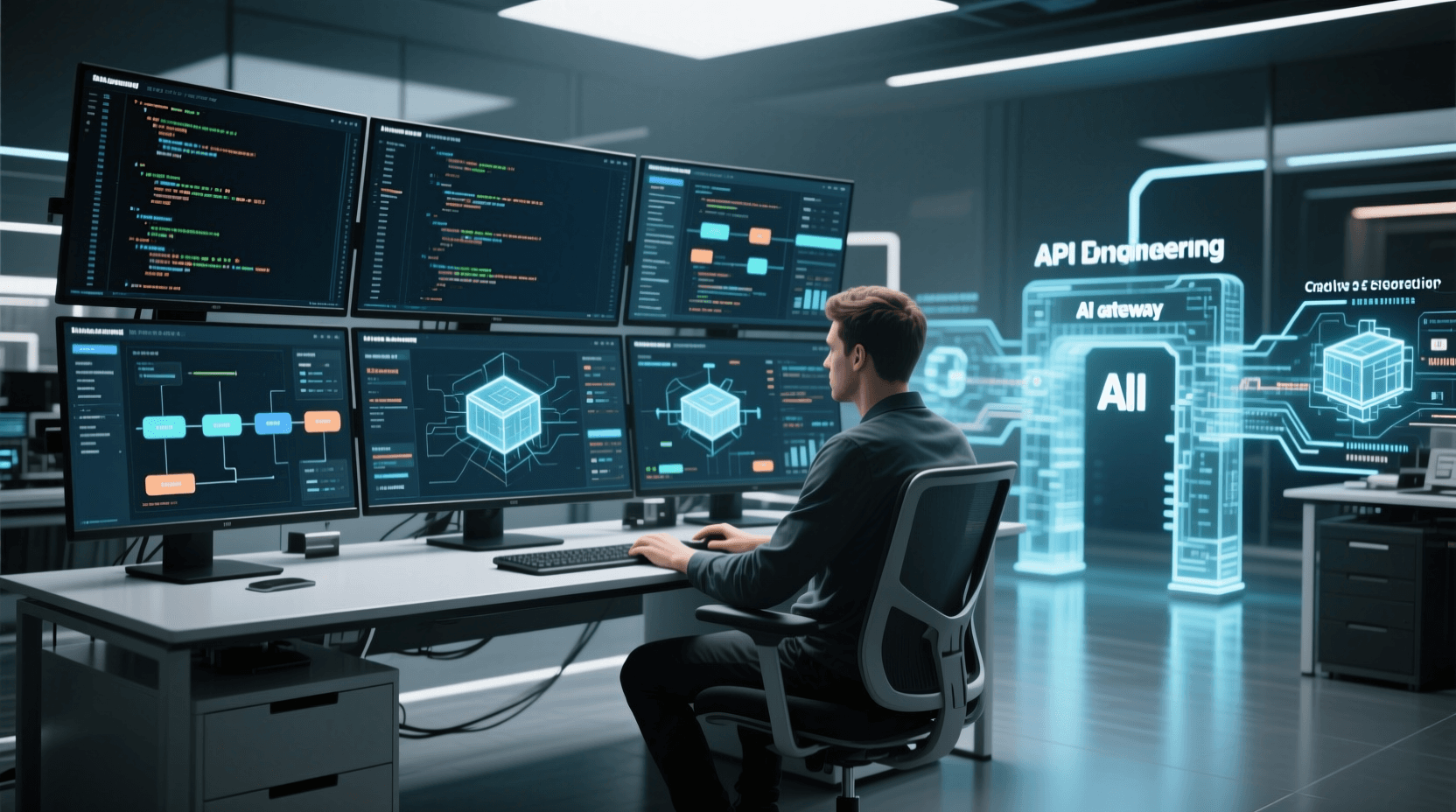
Large language models are no longer judged only by benchmark scores or model size. Increasingly, the real differentiator is whether a model can operate effectively inside the messy, tool-heavy environments where developers actually use AI: coding agents, browser agents, design pipelines, and multi-step production workflows.
That is why the latest wave of work around token-faithful rollout infrastructure matters more than it may appear at first glance. The interesting story is not just that reinforcement learning can improve agent performance. It is that the training stack is starting to adapt to real-world agent harnesses instead of forcing developers to rebuild everything around the trainer.
The shift from model-centric AI to workflow-centric AI
For years, the AI industry has been obsessed with the model itself: bigger context windows, stronger reasoning, lower latency, cheaper inference. Those things still matter. But for many teams, the practical bottleneck has moved.
Today, the question is often: can your model improve while staying compatible with the tools and orchestration layers your team already relies on?
That sounds boring compared with frontier-model headlines, but it is exactly where adoption friction lives. If improving an agent requires rewriting the harness, changing the tool protocol, or losing observability into token-level behavior, most product teams will delay the upgrade. Not because they dislike better performance, but because infrastructure churn is expensive.
A framework that can sit between an existing agent harness and an inference layer points toward a more pragmatic future for reinforcement learning. Instead of demanding a custom, lab-only setup, training can start to happen in the same environments where agents already produce value.
Why token faithfulness matters more than most teams realize
A lot of AI products still evaluate outputs at the message level: did the assistant eventually produce the right answer, the right patch, the right action sequence? But agent quality is often determined much earlier, at the token level.
A coding agent does not fail only because it reaches the wrong final answer. It fails because it drifts, overcommits, calls tools too early, calls them too late, or gets trapped in low-value reasoning loops. Those are behavioral issues, not just output issues.
Token-faithful capture creates a path to train on the actual decision surface of the agent. That matters because modern AI systems are increasingly hybrid: a model reasons, emits tool calls, reads tool outputs, revises plans, and continues. If the training data loses fidelity during that process, the learned behavior can become detached from how the agent really operates in production.
For developers, this is a big deal. It suggests a future where post-training is less about abstract benchmark optimization and more about tuning an agent to behave correctly inside a specific harness, with a specific toolset, under specific operational constraints.
The real winner: teams that treat infrastructure as a model multiplier
The headline takeaway for AI builders is simple: the next competitive edge may come from training infrastructure that preserves real interactions, not just from access to better base models.
This is especially relevant for teams using multiple model providers. A service like LLMWise already reflects how the market is evolving: developers want one API layer that can route between GPT, Claude, Gemini, and other models based on task fit and cost. Once routing becomes standard, the next logical step is optimization across that stack.
In other words, if your application can dynamically choose the best model for a prompt, you will eventually want to train or fine-tune behavior based on what actually happens across those routed interactions. Infrastructure that captures faithful trajectories could become the missing layer between model routing and model improvement.
That has implications beyond coding assistants. Consider creative pipelines. Video generation systems like Framepack AI show how much value comes from making advanced generation practical on consumer hardware. But as AI video tools become more agentic, planning shots, iterating prompts, selecting styles, and coordinating edits, the same principle applies: the best systems will not just generate output. They will learn from the exact sequence of user interactions and tool decisions that led to successful output.
The same is true in 3D content workflows. With tools like Pixal3D, creators can move from image or URL to production-ready 3D assets without local setup. As these pipelines become more automated, there is a growing need for agents that can make reliable multi-step decisions across reconstruction, asset comparison, and export choices. Training those agents on faithful interaction traces could be far more valuable than generic model tuning.
What this means for AI tool users
For end users, this trend should gradually produce AI systems that feel less erratic. Not necessarily more magical, but more dependable.
That distinction matters. Users do not always need an AI that can solve novel research problems. They often need one that can reliably complete a software ticket, create a usable asset, or execute a workflow without derailing halfway through. Better rollout infrastructure is part of how the industry gets there.
It also points to a more customized future. Instead of one-size-fits-all assistants, we are likely to see domain-tuned agents trained within the exact harnesses used by software teams, design studios, and media pipelines. The result should be AI that is not just generally smart, but operationally aligned.
The bigger picture
The most important AI advances over the next year may not be flashy model launches. They may be the quieter infrastructure improvements that let teams train, evaluate, and deploy agents inside real production systems without tearing those systems apart.
That is the strategic significance here. The industry is moving from asking, “Which model is best?” to asking, “Which stack helps us improve behavior where work actually happens?”
The companies that answer that second question well will have an advantage that benchmarks alone cannot capture.