Why Visual AI Is Becoming the Real Growth Engine for Consumer Apps
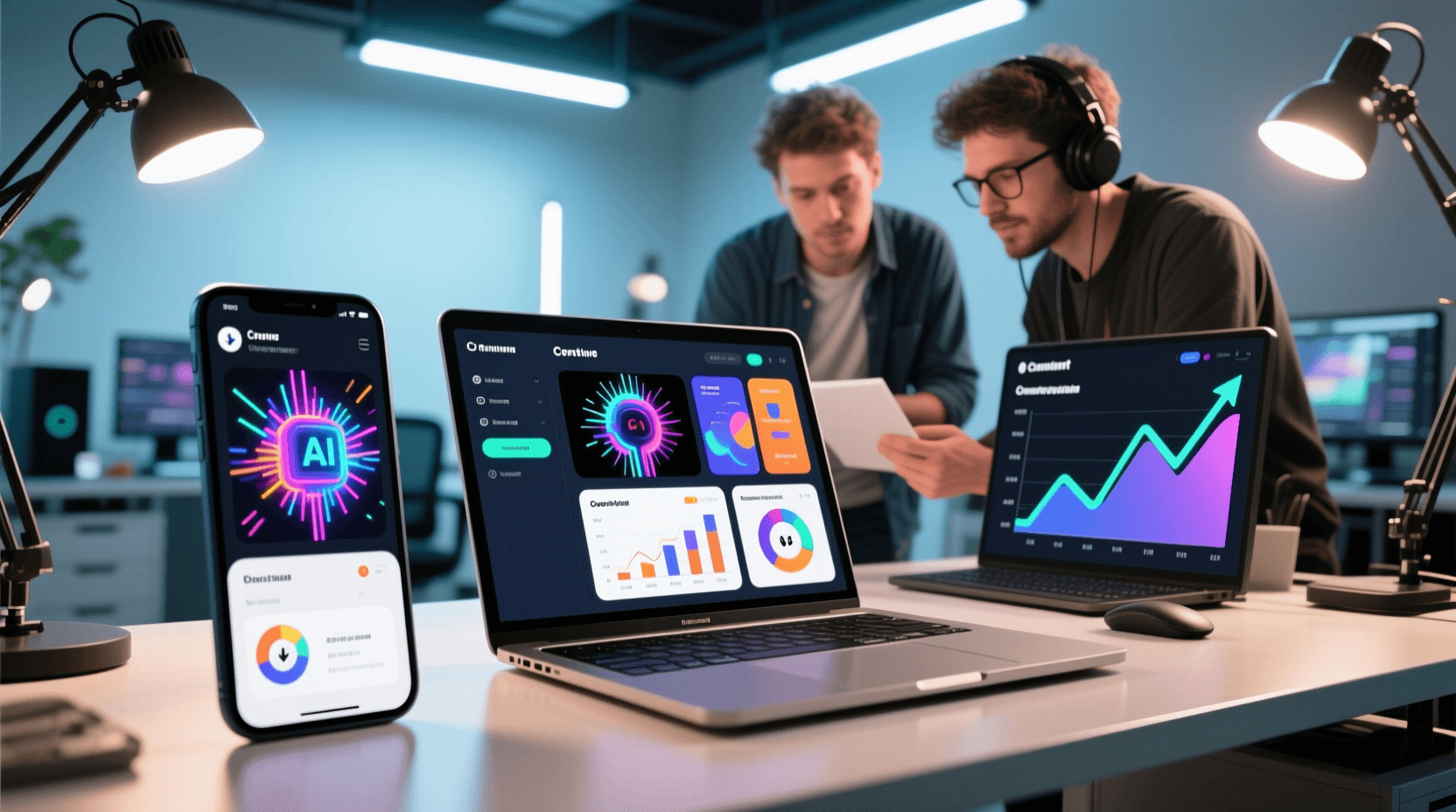
The latest signal from the app economy is hard to ignore: visual AI is increasingly better at getting users to click “download” than another round of chatbot improvements.
That does not mean chat is finished. It means the center of gravity is shifting. For consumer apps, image generation is easier to market, easier to demonstrate, and often easier for users to understand in five seconds. A better chatbot may be technically impressive, but an AI image feature is instantly legible: type a prompt, get a result, share it.
Why image AI wins the first impression
Most app growth starts with a simple question: can a user understand the value before they install?
Visual AI has a major advantage here. Screenshots of generated portraits, product mockups, anime scenes, ad creatives, or stylized selfies communicate utility and delight immediately. In contrast, improvements to reasoning, memory, or conversational quality are harder to show in an app store listing or a social clip.
That matters because discovery is increasingly visual. TikTok demos, Instagram reels, YouTube shorts, and app store preview videos all reward products that can produce a dramatic before-and-after moment. Image AI creates that moment naturally.
Tools like Imagens.App fit directly into this trend. Multi-model image generation, style customization, and batch creation are not just technical features; they are growth features. The more visibly different the outputs are, the easier it is for creators, marketers, and casual users to justify trying the product.
Downloads are not the same as businesses
The more important part of this story is not that image AI can drive installs. It is that many apps still fail to turn that demand into durable revenue.
This is the classic AI app trap: a feature goes viral, acquisition spikes, social sharing explodes, and then retention collapses. Why? Because novelty is not a moat.
Users may love generating ten fun images on day one. But if the app does not help them solve a recurring problem, they rarely become subscribers. Consumer AI teams often confuse “wow” with “workflow.” The winners will be the apps that turn visual generation into a habit, not just a stunt.
That means developers should stop asking only, “How good is our model output?” and start asking:
- Does this save the user time every week?
- Does it integrate into a creator or business workflow?
- Is there a reason to come back after the first batch of generations?
- Is payment tied to a clear outcome?
An app built around profile picture novelty has a ceiling. An app built around repeatable content production, ecommerce creative, or team collaboration has a business.
The next wave is not image generation alone
The strongest products will combine visual AI with packaging, editing, and distribution.
That is where platforms like AI Best are especially relevant. Supporting multiple advanced models for both images and video points toward the real opportunity: users do not want to manage model complexity. They want one place to go from idea to asset. The app that wins is less likely to be the one with a single flashy generator and more likely to be the one that helps users produce campaign-ready outputs across formats.
In other words, image AI is becoming the top of the funnel, but the product must continue beyond generation. Templates, brand consistency, resizing, batch exports, collaboration, scheduling, and asset management are where monetization gets stronger.
What this means for developers
For developers, the lesson is subtle but important. Do not build for the launch spike. Build for the second and fifth session.
Image AI can lower customer acquisition costs because it is naturally demo-friendly. But if your economics depend on constant paid acquisition or viral bursts, you are building on unstable ground. The better strategy is to use visual AI as the hook and then deepen the product around a specific use case:
- social media content pipelines
- ecommerce product imagery
- game asset ideation
- storyboarding and pre-production
- personalized marketing creative
Developers should also watch trend velocity closely. Visual AI categories move fast, and feature parity arrives quickly. Following what is breaking through in the market is now part of product strategy, not just marketing research. Resources like AI Tech Viral can help teams track which AI experiences are gaining traction before they become crowded categories.
What users should expect next
For users, this shift is good news, with one caveat.
The good news is that AI apps will become more tangible. Instead of abstract promises about intelligence, more tools will offer concrete outputs you can use right away: thumbnails, ads, concept art, product photos, short videos, and branded visuals.
The caveat is that many of these apps will still be over-optimized for growth rather than usefulness. Expect more free trials, credit systems, and viral templates designed to maximize installs. The smart user will look beyond the first result and ask whether the tool consistently delivers quality, control, and speed.
The bigger picture
This is not a story about chatbots losing. It is a story about AI entering a phase where visible outcomes beat invisible upgrades.
That is a major shift for the app ecosystem. The products that grow fastest may no longer be the ones with the smartest underlying model, but the ones that package AI into experiences people can instantly see, share, and repeat.
Image AI has become the clearest expression of that change. Now the real challenge begins: turning attention into utility, and utility into a business.