Why Specialized Cybersecurity Models Could Reshape the AI Tool Stack
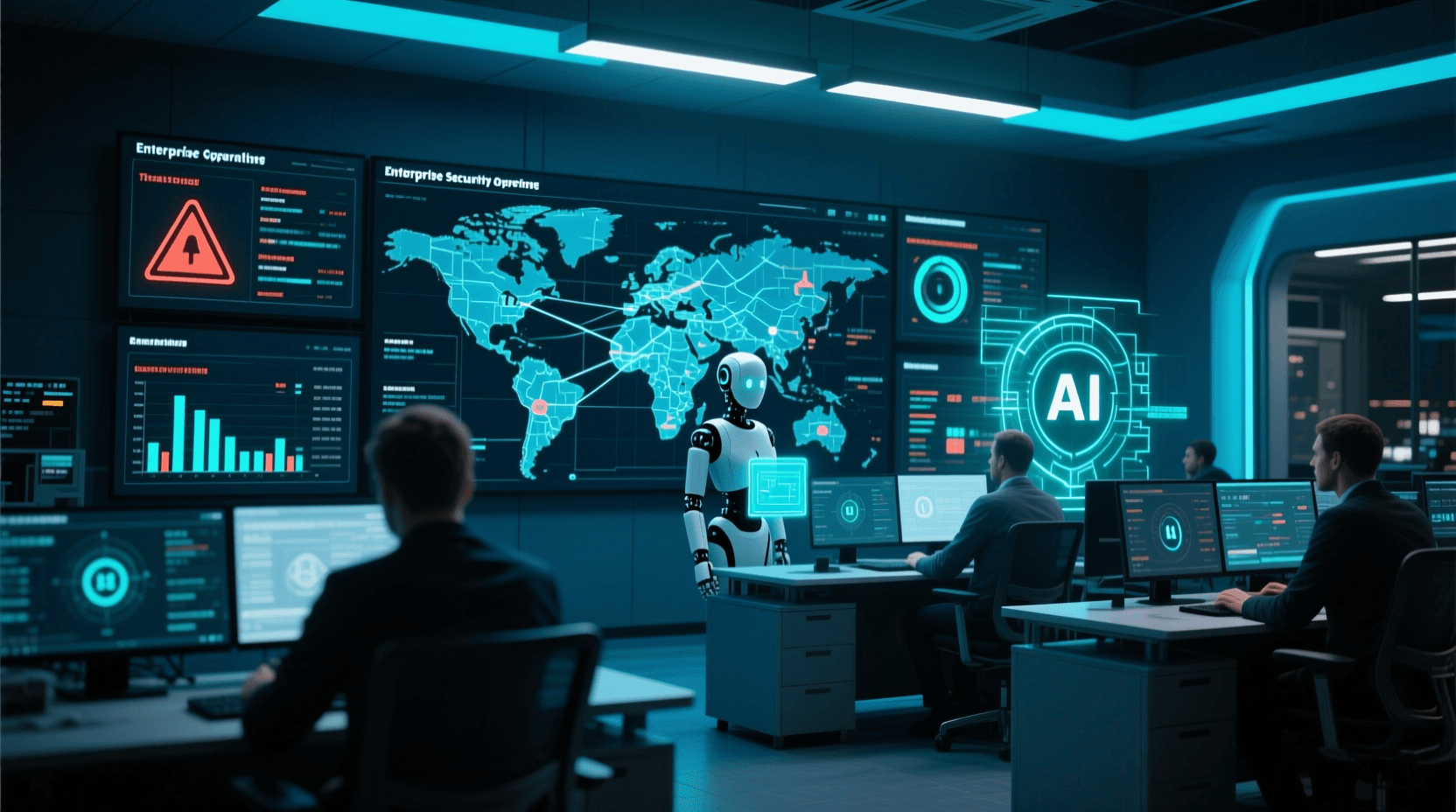
OpenAI’s decision to introduce a cybersecurity-specific model is more than a product launch. It signals a deeper shift in how frontier AI may be packaged, governed, and deployed: not as one giant general-purpose brain for every task, but as a growing family of domain-constrained systems with narrower permissions, tighter access controls, and more explicit operational intent.
For AI users and developers, that matters a lot.
The biggest story here is not simply that a model can help with defensive cybersecurity. It’s that the AI industry is starting to admit something important: some domains are too sensitive for the old “one model, many use cases” mindset. Security, healthcare, finance, and critical infrastructure all have different risk profiles. A specialized cyber model suggests the future AI stack may be built around capability segmentation rather than raw model scale alone.
From general intelligence to operational intelligence
For the past two years, most AI adoption has followed a familiar pattern. Teams start with a general model, then wrap prompts, guardrails, retrieval, and workflow logic around it until it behaves like a specialist. That approach works surprisingly well, especially with strong API models like GPT-4.1, which already offers major gains in coding, instruction-following, and long-context performance.
But cybersecurity is one of the clearest examples of where prompt engineering eventually hits a ceiling.
Security work is not just about generating text. It involves threat reasoning, log interpretation, attack path analysis, secure configuration review, incident triage, and understanding how tiny technical details can cascade into severe organizational risk. A model trained specifically for defensive contexts can, in theory, become much better at distinguishing between normal technical ambiguity and actual indicators of compromise.
That creates a new category of AI value: models that are not merely smarter in general, but more trustworthy inside a high-stakes workflow.
Why restricted access is probably the real product feature
The restricted rollout is easy to interpret as caution, but it may also be the product strategy itself.
In cybersecurity, access control is part of capability design. If a model is good enough to materially improve blue-team defense, it may also be useful for reconnaissance, evasion planning, or vulnerability exploitation if released too broadly. That means the distribution model becomes inseparable from the model’s safety profile.
This is a preview of what we may see across AI: gated expert access, verified user classes, auditable usage, and narrower deployment channels for high-risk capabilities. In other words, the most important innovation may not be the model weights. It may be the policy wrapper around them.
Developers should pay attention here. If you build on AI APIs today, the long-term platform question is no longer just latency, pricing, and context windows. It’s whether your application depends on capabilities that could later move behind identity verification, compliance review, or industry-specific licensing.
What this means for security teams using AI
For security teams, specialized models could reduce one of the biggest current frustrations with AI assistants: plausible-sounding but operationally weak advice.
A generic model can explain what a CVE is or draft an incident report. A stronger cyber-native system should be better at prioritization, pattern recognition, and context-sensitive judgment. That could make AI more useful in SOC workflows, internal audits, threat hunting, and remediation planning.
But teams should resist the temptation to treat specialization as infallibility. Security AI will still need validation layers, human review, and evidence-based workflows. In fact, the more specialized the model sounds, the more dangerous overtrust becomes.
This is where tooling around verification becomes essential. As AI-generated reports, alerts, and documentation become more common, organizations will need ways to distinguish human-authored analysis from machine-generated content and to audit where language originated. Tools like GPTDetect become more relevant in that environment, especially for governance, compliance, and content provenance across internal security communications.
The rise of domain-specific AI interfaces
Another likely consequence is that the interface layer around AI will become more specialized too. A cyber model should not live only in a chat box. It should plug into SIEM pipelines, ticketing systems, endpoint telemetry, cloud posture dashboards, and internal knowledge bases.
That means developers have an opportunity to build orchestration products around specialized models rather than competing with them directly. The winning products may not be “another chatbot for security,” but workflow systems that route the right task to the right model under the right controls.
And this pattern won’t stop at text. Security teams increasingly need visual outputs too: architecture diagrams, phishing-awareness assets, incident explainers, executive briefings, and training materials. That makes image-generation tools part of the same operational stack. A model like GPT Image 1.5 can help teams produce clearer visual documentation, mockups, and internal education assets without pulling design resources into every security initiative.
The bigger signal for AI builders
The release of a defensive cyber model points toward a more segmented AI market. General models will still matter, but the highest-value commercial category may be expert systems tuned for regulated or adversarial environments.
For builders, that changes the roadmap. Instead of asking, “How do we build one app that uses the best general model?” the better question may be, “Which parts of our workflow deserve a specialist model, and what governance do we need around it?”
That is a healthier direction for the industry. It recognizes that capability without context is not enough. In sensitive domains, the best AI product is not the one that can do everything. It’s the one that can do the right things, for the right people, with the right constraints.
And that may be the real future of enterprise AI: less universal magic, more controlled expertise.